
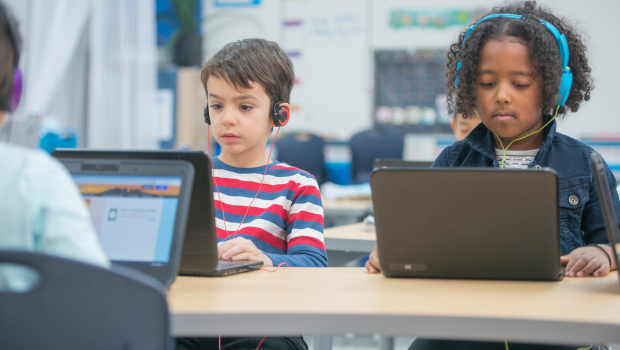
The State Board of Education has adopted an updated position statement and policy guidance on personal and purposeful technology use in schools. It expands the state’s previous recommendations beyond student cell phone use to include classroom screen time and the intentional use of educational technology.
“Students deserve classrooms where they can focus, learn, and connect without the constant distraction of screens,” said CEA Vice President Joslyn DeLancey, a fifth-grade teacher. “The updated state guidance builds on the important legislative changes that have already been made to strengthen school climate and require play in the classroom, especially in the early grades. Together, these efforts create learning environments where students can develop the skills they need to succeed. Ensuring students are learning in ways that encourage creativity, innovation, and concentration so they can make meaningful connections with their teachers are at the heart of a strong education.”
In an EdWeek Research Center nationally representative sample of 753 teachers, principals, and district leaders more than half say students spend more than 3 hours of the school day using educational technology. Seventy percent said middle school students typically use educational technology for at least 3-4 hours a day, and 76% said the same about high school students.
The State Board of Education recommends that local and regional boards of education develop districtwide technology use policies that establish bell-to-bell restrictions on student use of personal technology while providing appropriate flexibility for instructional purposes and individual student needs.
After a bill CEA had championed that would have required bell-to-bell cell phone bans in schools did not pass during the 2026 legislative session, Governor Ned Lamont directed the State Department of Education to update guidance to reflect the latest research and provide districts with additional tools and resources.
“Personal technology has its place, but during the school day our students should be focused on learning,” Lamont said. “I continue to support bell-to-bell restrictions on personal devices, so I appreciate Commissioner Russell-Tucker for leading the development of this updated guidance and the State Board of Education for adopting it to help districts create classrooms where students stay focused, connect more with one another, and are better prepared to succeed.”
The updated guidance does not offer specific time limit recommendations for educational technology use but does state that more hands-on learning is appropriate in elementary school, whereas middle and high school students should have increasing autonomy in managing their educational technology use.
Highlights of the updated guidance include:
- Expanding the focus beyond cell phones to address all personal technology use, purposeful utilization of educational technology, and limits on classroom screen time
- Recommending bell-to-bell restrictions on student use of personal technology, while allowing appropriate flexibility for instructional purposes and individual student needs
- Providing direction to ensure that students with disabilities and with special health care needs have access to digital devices and technology necessary to support their learning and well-being
- Encouraging districts to evaluate their use of educational technology and promote intentional, evidence-informed screen time that supports teaching and learning
- Providing grade-band recommendations for both personal technology use and purposeful screen time based on students’ developmental level and needs
- Offering expanded implementation guidance for local boards of education, school leaders, educators, families, students, and higher education institutions
- The updated guidance does not create a statewide requirement; rather, it encourages districts to engage with families, students, and educators when developing local policies that establish bell-to-bell restrictions, while allowing thoughtful exceptions for specific educational situations and for students with special developmental and health care needs.
Read the updated state guidance on Personal and Purposeful Technology Use in Connecticut Schools.