
Advocacy.
Action.
Protection.
Empowerment.
Collaboration.
Solidarity.
Good trouble.
Rabblerousing!
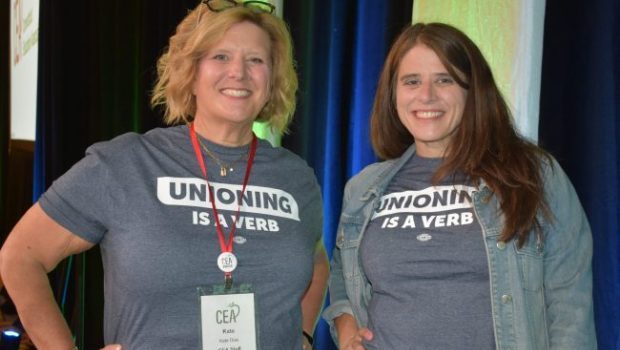
Those were some of the ways educators defined “unioning”—a term introduced by CEA President Kate Dias and Vice President Joslyn DeLancey at CEA Summer Conference August 5-6 at Foxwoods, with more than 500 educators in attendance representing grade levels, disciplines, and districts across the state.
Beyond the basics
Digging into her early experiences as an educator coming through Connecticut’s Alternate Route to Certification (ARC), Dias recalled being instructed simply to “teach math.”
“No specifics. No curriculum. No textbooks or other materials. Just me scavenging materials to teach math in an alternative setting,” she explained, adding that, fortunately, the education landscape in Connecticut has evolved since then.
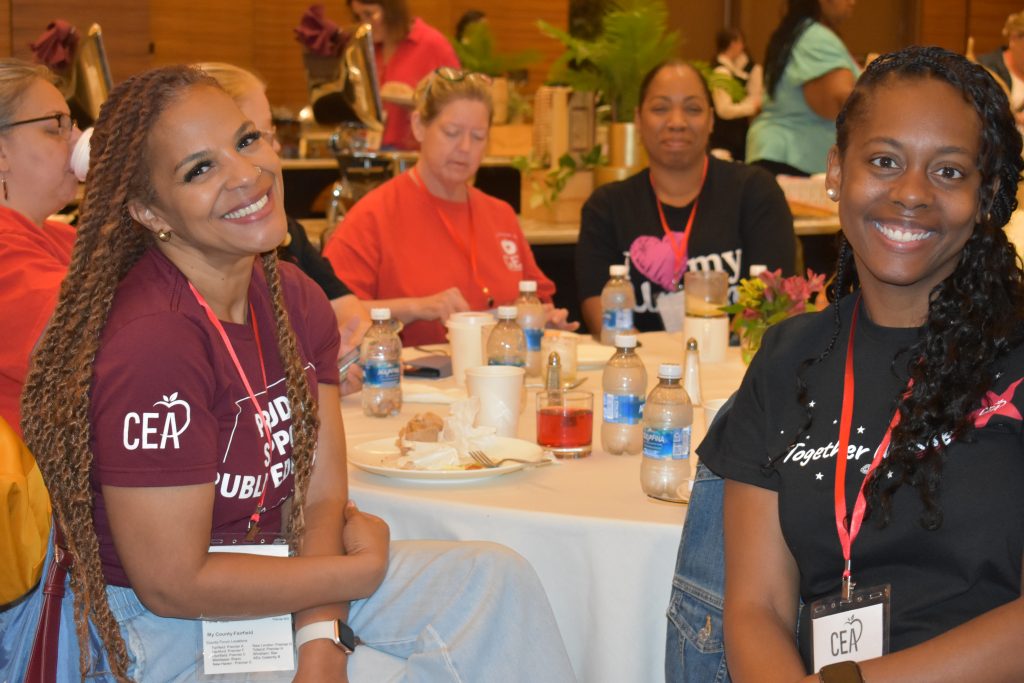 “We’re more sophisticated now,” she acknowledged. “You at least get a set of books and are told what kind of math you’ll be teaching. When we talk about how much our profession and our students’ learning conditions have changed, it’s astonishing how far we’ve come. But we’re always thinking about where we actually want education to go and how the world can think differently about schools and how students can be taught. So we’re adopting this mindset: Unioning is not something that happens to us but something we do together on a day-to-day basis.”
“Unioning means something different to everybody,” DeLancey noted, “and each part we do together makes us the powerful force we are—the union that established fair termination, that repealed WEP/GPO, that guaranteed full workers’ compensation for educators physically harmed by a student. That’s unioning.”
My ‘why’
“This is my fourth Summer Conference,” said English teacher and Bolton Education Association President Colin Dennis, joined by a team of colleagues entering negotiation season. “We wanted to refresh ourselves on strategies.”
Dennis, who attends Summer Conference every year, explained, “The more involved you are, the better off we all are. I came here when I was elected president of my local association. I came when I first became a building rep. Getting involved can be as simple as going to union events, supporting the Connecticut Education Foundation, staying active with CEA-Retired. Participating in the work of your union helps you in the long term, because we’re stronger when we work together.”
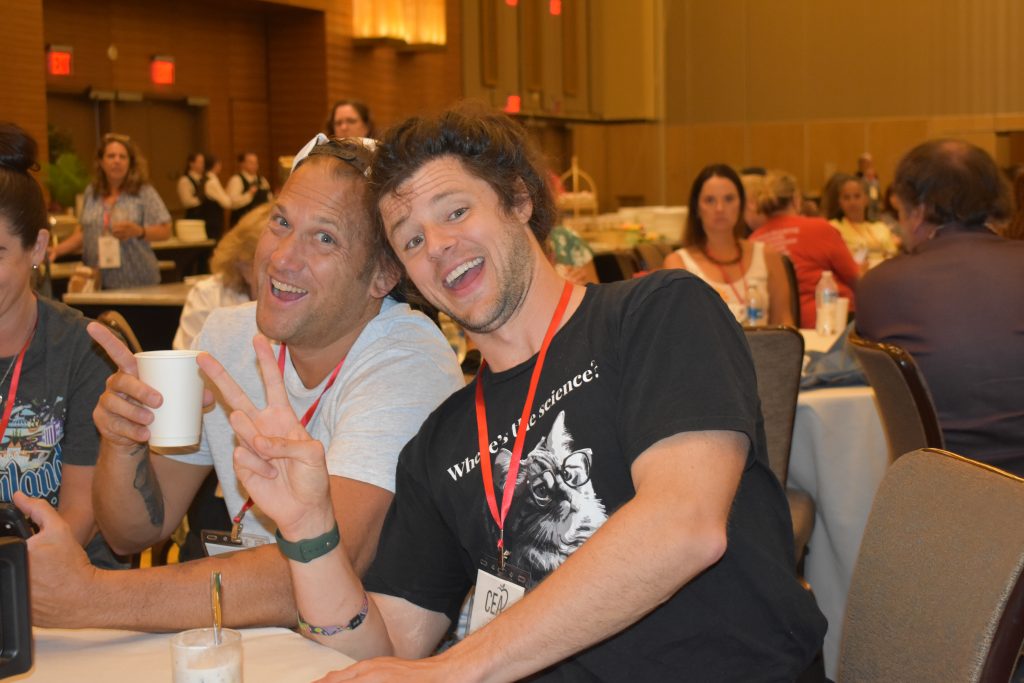 “I’ve been teaching for a really long time—more than 30 years,” said Region 18 Teachers Association Co-President Dawn Kelley, an Old Lyme chemistry and forensics teacher. Last year, with the school year already underway and no one officially leading her local union, Kelley said, “I couldn’t live with myself if I didn’t step up. I had served as secretary and in other union roles over the years, so I knew I could do it. Another veteran teacher and I decided to lead together. We have 100% participation in our local union, and we’re going to keep moving forward, letting our members know all the perks of belonging to CEA. ”
Since assuming the role of co-president, Kelley’s met with leaders of other local associations to build a professional network and union strength. She’s also deepening her involvement at the statewide level.
“I attended the CEA Representative Assembly for the first time this year, because our local needed to have a voice. It was eye-opening, I really enjoyed it, and I’m planning on going back next year.” She was also drawn to Summer Conference knowing there would be sessions she could learn from as a leader.
 Leveling up
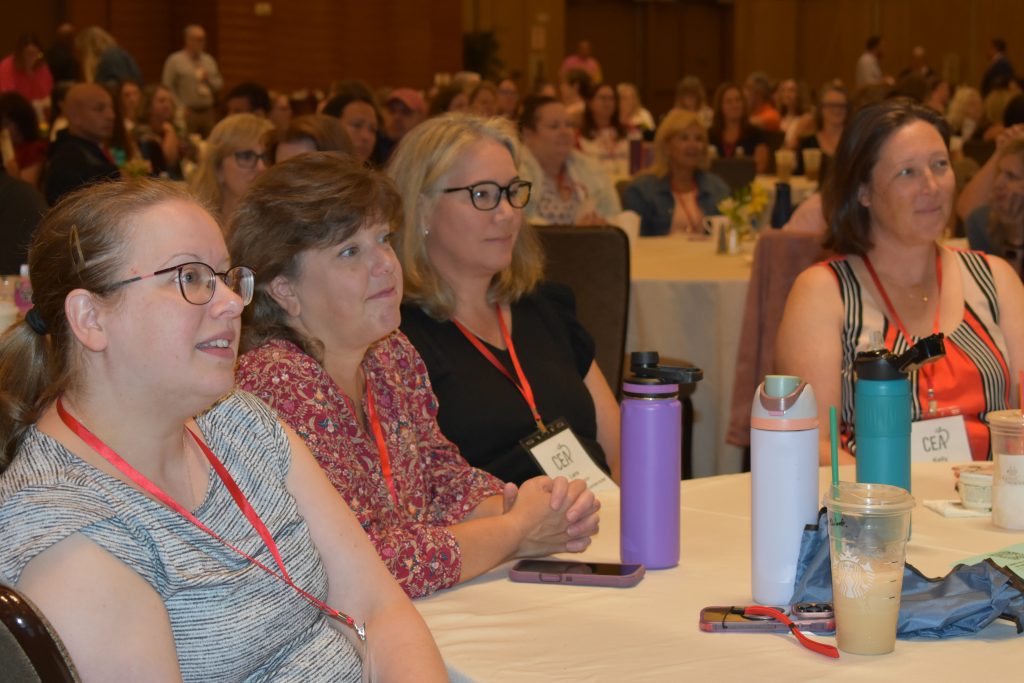
Lisa LaPlante, a 19-year veteran Watertown educator and SRBI coordinator in her second year as president of the Watertown Education Association, has similarly built a long history of union involvement, including as membership chair and 12 years as a building rep.
“This is only my second time attending Summer Conference,” she said, noting, “Last year’s conference was amazing and really inspiring for me. I learned so much in all the sessions, I loved interacting with the vendors, and it’s just a great time to come together outside the classroom and ahead of the new school year. We are a medium-sized union, and now that I’m comfortable in my position as president, I’m eager to do more and gather ideas. We’re going into negotiations this year, so I’m interested in things like how to bargain for insurance and build local union strength. A lot of sessions are relevant to what I’m trying to learn.” She added, “Though I’m a long way from retirement, I also signed up for a workshop on retirement planning.”
Another Summer Conference second-timer, West Hartford third-grade teacher Jason Buehler said, “The reason I came back is because I learned so much last year about community, teaching, learning, and being part of a union. “I thought, I need to come learn even more about how I can contribute effectively to my union. Besides that, I just like being in the company of other teachers and getting to ‘talk shop’ in a way that’s not contractual but just about connecting over our shared profession.”
“I’m here to not only bond with my new executive board but also hone my skills,” said CEA Aspiring Educator Rebecca Drazul. A rising senior at Eastern Connecticut State University preparing to take her Praxis, Drazul benefited from a workshop on tools and strategies for taking the exam.
Branching out
Third-year Bloomfield CREC elementary teacher and first-time Summer Conference attendee Germaine Gumbs-James said CEA’s Summer Conference came highly recommended by mentors who pointed out the many opportunities to learn about a wide variety of topics. Dozens of educational sessions this year included
- Grievance Processing
- Roadmap to Pension Planning
- Underwriting, Budgeting, and Advanced Insurance Bargaining
- Administrators’ Investigations
- Building a Better Union
- Building More Resilient Brains: Executive Functioning Skills at Every Age
- Legal ABCs for Educators
- Navigating Connecticut’s Tiered Support and Corrective Action Process
- Confronting the Sunday Scaries
- Planning Your Ideal New Educator Orientation
- Decoding the Secrets of Your Contract
- LGBTQ+ Rights in Education
- From Classroom to Chambers: Educators Leading in Government
- Successful Communications Campaigns
- Financial Literacy for Educators
- Challenging Student Behavior
- Fresh Ideas for Bargaining
- Organizing to Pass a Local Budget
- Legislative Advocacy
- Teaching in the Age of Social Media
- Navigating the Culture Wars
“I always like to come, because there are so many different people you can meet, and you gain an understanding of what’s happening with educators around the state,” said Beth Foulds, a CEA Board member and educator with the Housatonic Valley Regional Faculty Association. “You’re exposed to other ideas and perspectives, and that’s especially important if you work in a small local, which can feel isolating. Coming here makes my practice and the work I do in the union so much stronger.”
Twenty-five-year veteran history teacher Heidi Laus first attended Summer Conference in 2018, when she became president of the Thomaston Education Association.
“I went to training specifically for local presidents, and the panel of experts included Kate Dias and Joslyn DeLancey, who at the time were local association presidents in Manchester and Darien, respectively. I learned so much from them about how to do the job—the daily ins and outs. And of course, just when I started to get my bearings, COVID hit, which became a whole new ballgame. So these annual workshops are really good refreshers—from the fundamentals of organizing to mobilizing for a school budget, all of which I’ve had to do.”
Summer Conference continues tomorrow with a half-day of workshops and a keynote address from teacher-turned-nationally touring comedian Devin Siebold.