
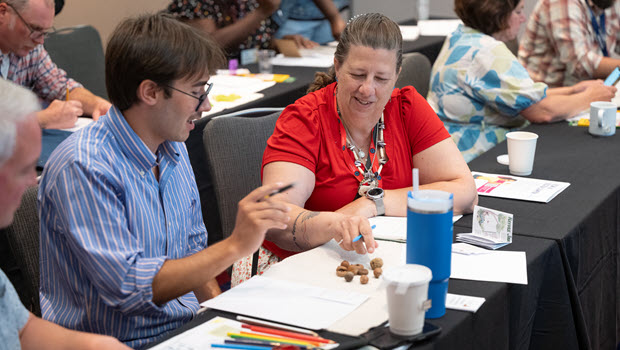
Hundreds of educators came together July 8 at Mohegan Sun to take part in the Connecticut Teacher of the Year Council’s annual symposium, Empowered to Lead, a day of camaraderie, inspiration, and professional learning. The theme of this year’s event was Rooted in Purpose: Catalysts for Change.
Praising what she described as educators’ enduring commitment to their work, CTTOY Council President Lauren Danner said in her welcoming remarks, “You play a powerful role in shaping the future of education and in our shared purpose of empowering students, strengthening schools, and serving as powerful catalysts for change. I hope you are enriched and inspired by what you learn, who you meet, and the ideas you take away today.”
Remembering your roots
Sharing how relationships he’s built with students and families inform his practice and underpin his purpose, morning keynote speaker and 2026 Connecticut Teacher of the Year Brian Betesh noted that the twin themes of this year’s symposium—rooted in purpose, catalysts for change—are personally important to him.
“Danbury, where I grew up and where I teach, is a community that doesn’t receive a lot of aid,” he said. “We are one of the lowest cities in the state for per-pupil expenditures, and we are surrounded by affluent towns with resources. When I look out at my students, I don’t think the opportunities and experiences they deserve should be defined by the imaginary lines they live within.”
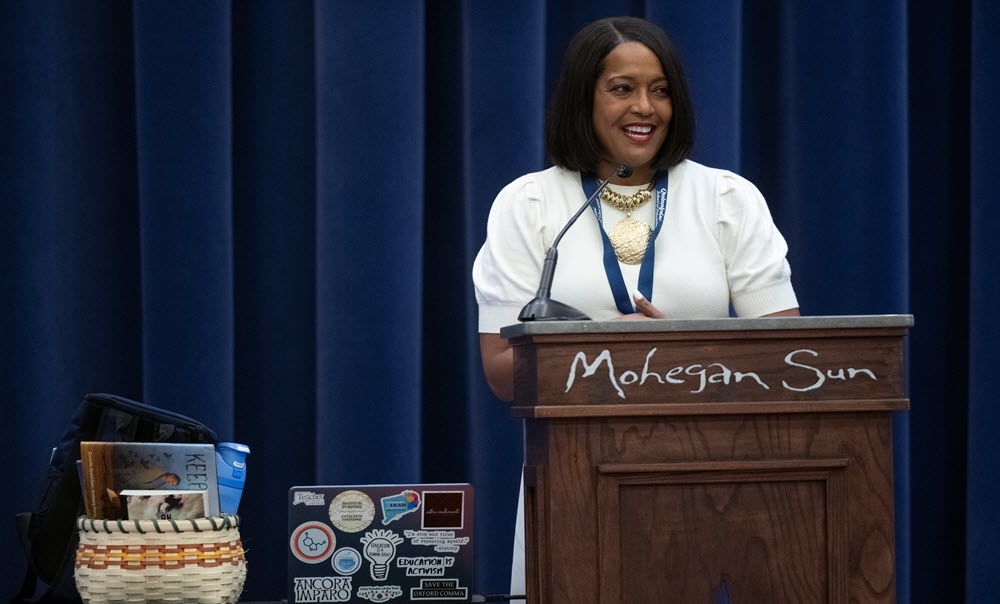 In her afternoon keynote address, Congresswoman Jahana Hayes, a veteran Waterbury educator and 2016 National Teacher of the Year, similarly described the joy of both working within and giving back to the community that raised and educated her.
Recalling her own struggles as a student, Hayes reminded educators that young people like her are in every classroom, and that like her, they can be lifted up by the strength and compassion of their teachers.
“Thinking about the absences I’d had in my life, I didn’t want my students to go through what I went through. I was open and transparent with them about having been a high school dropout and a teenage mother, about having a mom who struggled with addiction, about being raised by my grandmother, about having several false starts at community college before things fell into place. It was important for me to attach my name to that narrative.”
As powerful and enduring as the support of teachers who held her up until she could stand on her own, said Hayes, were the words of a lone educator who once criticized her family, clocking their absence at the school’s open house.
“All these years and all these awards later, she stands out—because words matter. Assigning value to people matters. Students come to school, and sometimes you’re the only safe space they have in their lives. I may be moonlighting as a congresswoman right now because there’s work to be done, but I still have my 026 and 092 in case this all goes sideways,” she said with a laugh, adding, “I’m still a teacher—always was; always will be.”
Recognizing and relating
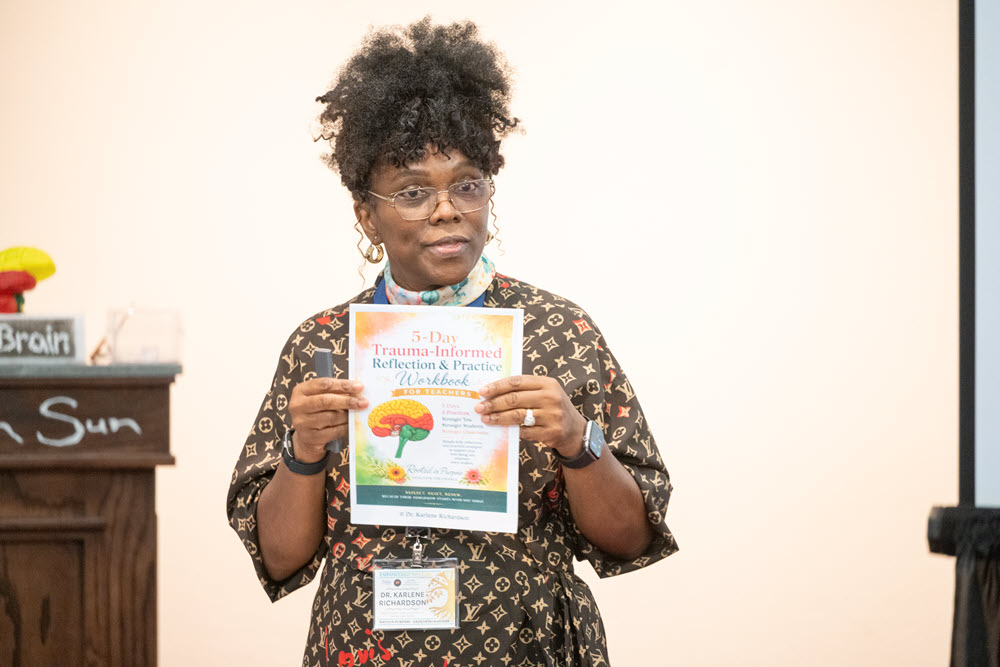 Bristol health occupations teacher Dr. Karlene Richardson knows firsthand what it means to recognize childhood trauma not only in our students but in ourselves—and the difference that recognition can make.
After years as a professor working in environments with students eager to learn, Richardson’s career as a high school teacher got off to a rocky start.
“Nothing prepared me for the role I stepped into,” she recalled in a workshop she led on trauma-informed practice. “Classroom management was a problem for me. In my first days, I filled every moment with activity, afraid that if I didn’t, students would become loud and rambunctious. Thankfully, I had a wonderful tribe of teachers who adopted me. I would walk down the hall—slowly—and peer into their classrooms. I would watch. I would listen.”
She also realized that her anxiety about noise was rooted in her own childhood experiences.
“Once I figured that out,” she said, “I made an intentional decision: I stood in front of my class and explained how overwhelmed I became by noise. I became transparent. It was a gamechanger. Students could relate, and it was no longer a shameful moment for me—or for them; it shifted everything in the classroom. Students understood that when they felt triggered, they could raise their hands and get a hall pass. They could see their counselor. As teachers, we sometimes worry about showing vulnerability. In my case it led to greater respect, greater relatability, and a shared experience with my students.”
 She added, “Many students walk into our classrooms with unseen burdens. This not only affects their behavior and ability to learn and regulate their emotions, but it also can also affect and sometimes trigger teachers. Even we can have unresolved trauma, and how it shows up is often how we respond to our students.”
Richardson’s workshop helped colleagues
- Develop a foundational understanding of how trauma impacts student behavior, learning, and classroom interactions
- Identify and reflect on personal experiences, personal triggers, and personal responses that can influence their teaching practices
- Apply self-regulation and trauma-informed strategies to prevent becoming a trigger and to respond instead with awareness, empathy, and intentionality
- Recognize how our own adverse experiences can unintentionally affect student relationships and classroom climate
Reading the room
“What is your thought process when you see a student with his head down at the back of the classroom?” she asked. Responses ran the gamut: bored, tired, sick, distracted, deep in thought, withdrawn, processing a trauma we can’t see.
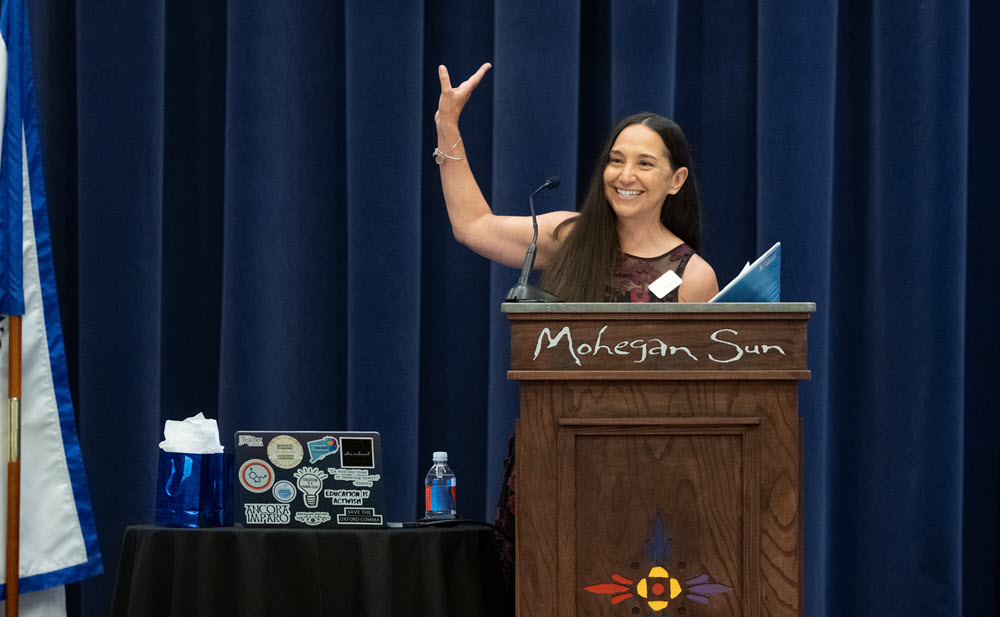
CTTOY Council President Lauren Danner welcomed educators to the symposium.
“We can misinterpret what we see in students, and I learned that the hard way,” Richardson shared. “I had a student once who was preoccupied with something in her lap, and I assumed she was on her phone. I called her out on it. But the reality was she was trying to pin her skirt back together. She stood up and said, ‘I don’t have a needle and thread at home.’ Sometimes what we see as disinterest or defiance is neither of those; it’s survival.”
She encouraged educators who encounter students acting up or shutting down to ask themselves:
- What do you see and hear?
- What might be activating this student’s response?
- What might my student need right now?
- What will you say or do in the moment?
- How will you reconnect and re-engage later?
“This workshop encouraged us to look within and see what kinds of triggers we may have, how they play out, and how we can reframe the way we handle challenges with students,” said Glastonbury Latin teacher Joey Meyer. “That kind of self-awareness is important to our relationships with students and our effectiveness as teachers.”
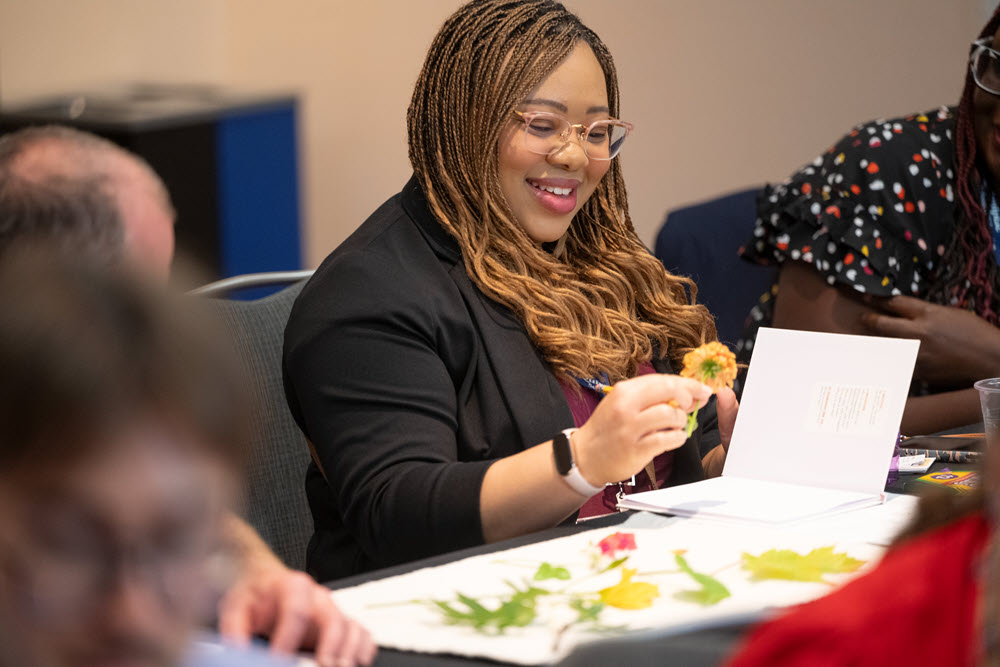 “What I most appreciate about this symposium is being around likeminded teachers, drawing ideas from them,” said Rocky Hill math teacher Brian Graca. “It’s wall-to-wall positivity and inspiration.”
Stratford music teacher September Baroquin attended a workshop that explored neuroscience research, common myths, biases, and teachers’ roles in not only delivering content but “building students’ brains.”
“I use brain research in the professional development I present and in my own work with students, and this workshop made that information accessible,” said Terryville English teacher and department chair Kate Avcollie. “I also attended a session on how to design schools that give students greater agency and ownership of their learning and therefore spark greater curiosity and engagement.”
“It’s always inspiring to be here with other teachers taking time out of their summer to learn how they can better support students and their learning,” Betesh agreed, adding, “It’s so hard to choose from the breakout sessions; there are so many good ones. I leave conferences like this better than when I came in and ready to get to work.”
 Other workshop session topics included
- Building equitable cultures through conversation
- Educators and students as catalysts for change
- Indigenous storytelling
- Fostering connection and curiosity through nature journaling
- Research-informed educator recruitment
- Self-efficacy and mindfulness as a framework for reflective, resilient teaching
- Teaching with Holocaust testimony and empowering oral history projects
- Attention, awareness, and contemplative practices for teachers
- Schoolwide emotionally intelligent practices to improve staff, student, and family outcomes
The symposium also presented an opportunity to recognize recent winners of the Presidential Award for Excellence in Mathematics and Science Teaching as well as announce scholarship awards for aspiring and early career teachers of color.