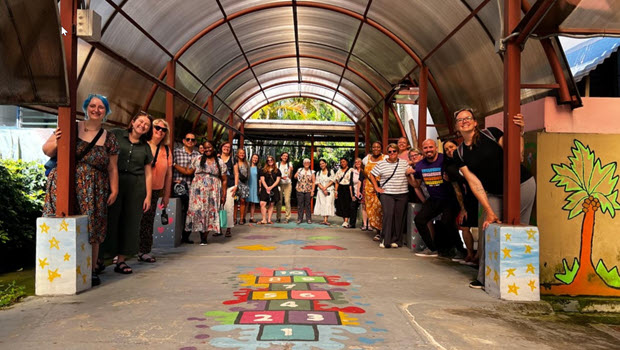
While many educators focus on relaxing and recharging over the summer, many others keep busy with second jobs, professional development, and/or travel. Bridgeport teacher Mikeya Stovall was able to combine two of those this summer during an incredible 10-day trip to Costa Rica where she toured natural landmarks, learned about the local culture, and visited schools while bonding with colleagues from across the U.S.
Through her experience as CEA’s John McCormack and NEA Foundation’s Award for Teaching Excellence winner, the third-grade Read School teacher learned about the NEA Foundation’s Global Learning Fellowship—a program for public school educators to develop the knowledge and skills to integrate global competency into their daily classroom instruction and help students to thrive in our increasingly interconnected world. Stovall already prioritizes incorporating learning about the countries of origin of her students, who come from across South and Central America and the Caribbean, and she thought the fellowship would be the perfect opportunity to learn more about embedding global concepts in her classroom.
Before embarking on the international trip, fellows engaged in ongoing workshops and webinars to learn from experts about the United Nation’s sustainable development goals and how they’re embedded in Costa Rica’s education system.
Stovall says fellows come from across the U.S., and she appreciated being able to work with other educators from different time zones on a small group project. Her group’s project focused on clean water and water systems across the U.S. “For my class, my students learned about the water cycle and how water gets to their homes in Bridgeport. Students brought in water samples from their homes, and we plotted their home addresses on a map to show how different chemicals showed up in water samples taken from different parts of neighborhoods.”
After months of preparation and study, Stovall found the Costa Rica trip extremely inspiring.
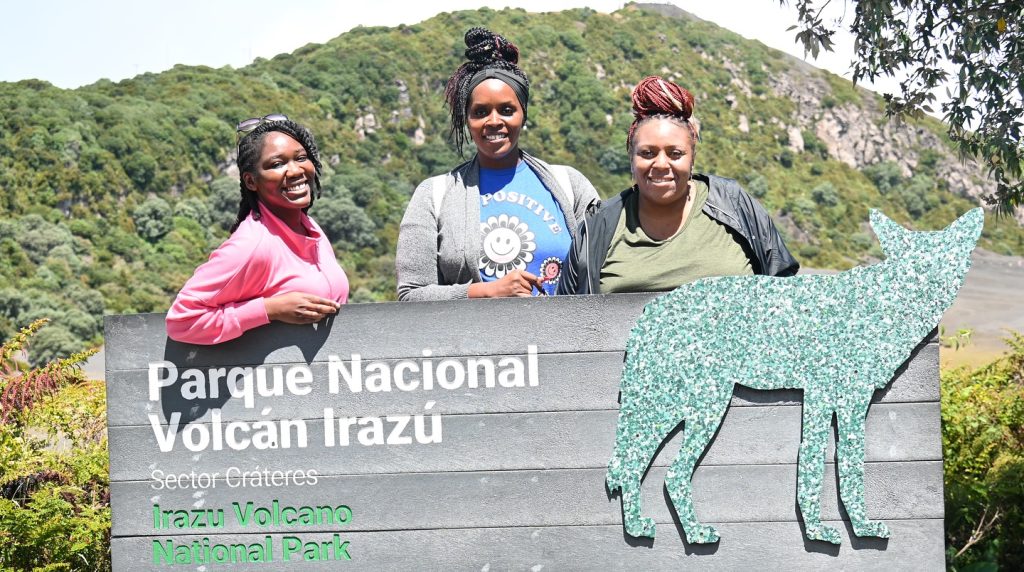
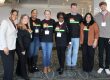
Bridgeport teacher Mikeya Stovall (right) visited Irazu Volcano National Park in Costa Rica with other NEA Foundation Global Learning fellows.
“Learning about Costa Rican culture, traditional foods, the natural environment, and their education model was fascinating,” she says. “In Connecticut, education varies city to city, but all the countries that are top performers on the Program for International Student Assessment have national education models—and Costa Rica does too. Schools are funded directly from the federal government and funded fairly regardless of zip code. Their education system is bilingual; students learn English and Spanish from preschool through high school, and many schools also offer French. Lots of kids learn three languages from a young age. Our kids in the U.S. are so disenfranchised as far as learning different languages.”
Their travels took Stovall and the other fellows to volcanos, national parks, and on hiking excursions.
“We learned about wildlife in Costa Rica and how people there value life in such a profound way. Sustainability is embedded in school culture and every part of society. There was no place where we traveled that didn’t have recycling and compost—they’re on every street corner. It’s so good to see how some nations are doing their best to preserve the Earth.”
The fellows also visited several schools, including one solely devoted to special education programs.
“In Bridgeport, we’re going to be building a school like that, so it was valuable to be able to visit a public special education school and see their practices and the amount of diversity among students and needs that educators are able to meet.”
Some of Stovall’s favorite visits during the trip were to an ecological farm and the University for Peace. The ecological farm was built by a man who grew up in a farming family and went on to become a teacher and principal. After he retired, he created the farm especially so that students can visit and learn about farming, animals, plant life, and wholistic approaches to medicine. The University for Peace was created by a United Nations General Assembly resolution and educates students from across the world working for peace on a global scale. Many courses focused on UN sustainable development goals and their intersection with peace and human rights.
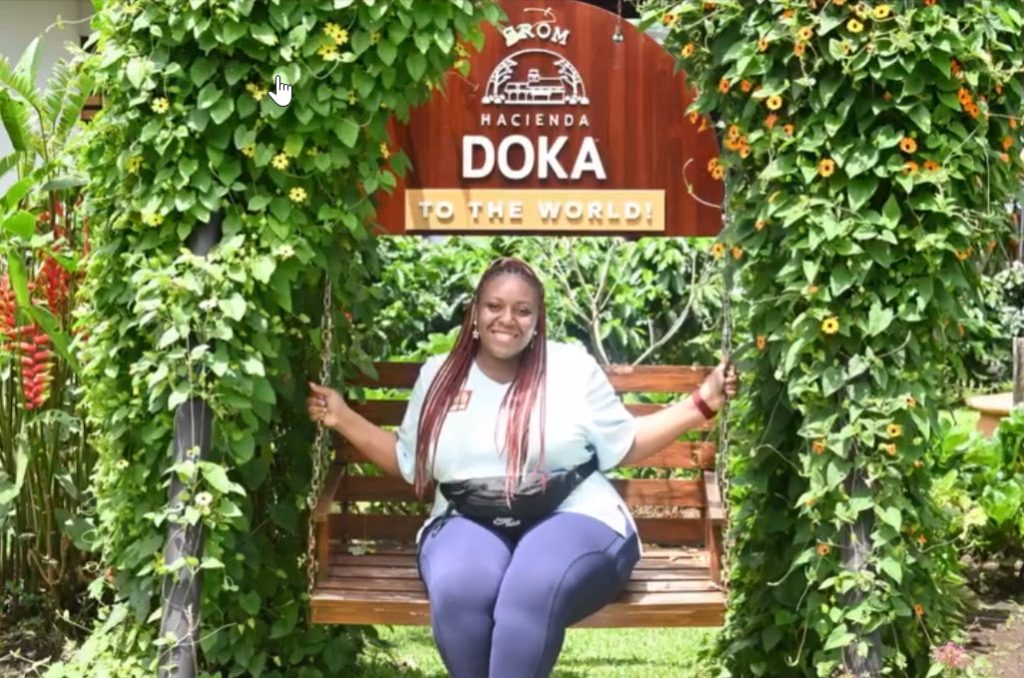
A coffee growing estate, Hacienda Doka was among the many locations Stovall and the other Global Learning Fellows visited while in Costa Rica.
Stovall says that none of the fellows knew about the UN’s 17 sustainable development goals before the trip.
“The goals are about principles for building a just, sustainable, and peaceful world society,” she explains, “I’m excited to bring back what I learned and figure out how to share it with other educators.”
In the fall, Stovall plans to go over all 17 goals with her students and have them pick one around which to develop a project.
“I’m looking forward to it, and I’m working on applying for an NEA Foundation grant to incorporate practices like recycling that we haven’t been doing so well in my school, especially since COVID. I’m looking forward to going back with renewed energy and motivation.”
Stovall also plans to share photos and some of what she learned with her class from last year. She had several students from Costa Rica in her class last year and wants to show them what she learned and the places she visited.
“The best thing about the trip was the professional development. Not just what we learned on the trip but the body of people I got to interact with—educators from across the nation who bring so many different experiences and diverse knowledge. I definitely recommend that other educators apply for this fellowship if they have an interest in ecology, sustainability, and making the world a better place.”
Applications for the 2026 Global Learning Fellowship to South Africa are already closed, but applications for the 2027 program will open in December. Subscribe to the NEA Foundation’s newsletter to receive updates about the Global Learning Fellowship and other information about NEA Foundation programming.