
“I lived in my car the entire time and nobody knew. I needed to graduate with this degree to be safe and have a shot at a better future.”
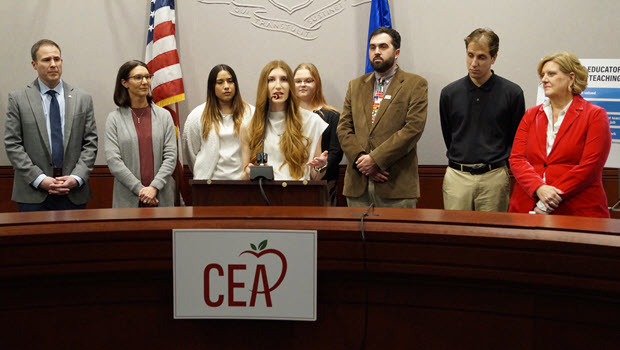
That’s how one educator describes the hardship posed by unpaid student teaching—the subject of a new survey and policy brief released today by the CEA Aspiring Educator Program during a news conference at the Legislative Office Building in Hartford.
The survey finds 90% of Connecticut’s student teachers are deeply concerned about affording groceries, and more than 80% say unpaid student teaching makes them feel exploited.
In addition to being a major stressor and financial hardship, unpaid student teaching is a significant deterrent for students considering careers in education and a barrier to diversifying the teaching profession; data shows it’s a key factor in the disproportionate dropout rate of nonwhite students from teacher prep programs.
Other key findings:
- Personal finances are a concern for more than 96% of current student teachers, with the vast majority reporting being considerably or extremely concerned.
- More than three-quarters of active and aspiring educators (78%) feel undervalued compared to peers entering non-education careers.
- Student teachers—who are required to work full-time without pay and are largely prohibited or discouraged from working second jobs—report concerns about their ability to afford groceries (90%), personal transportation (83%), professional clothing (73%), rent (68%), tuition (63%), and other necessary expenses.
- States that provide financial compensation during student teaching report stronger enrollment in educator preparation programs and more diverse applicant pools.
At today’s news conference CEA leaders, aspiring educators, and legislators discussed survey results and proposed legislation to compensate student teachers, as several other states do, and address shrinking enrollment and diversity in Connecticut’s educator preparation programs.
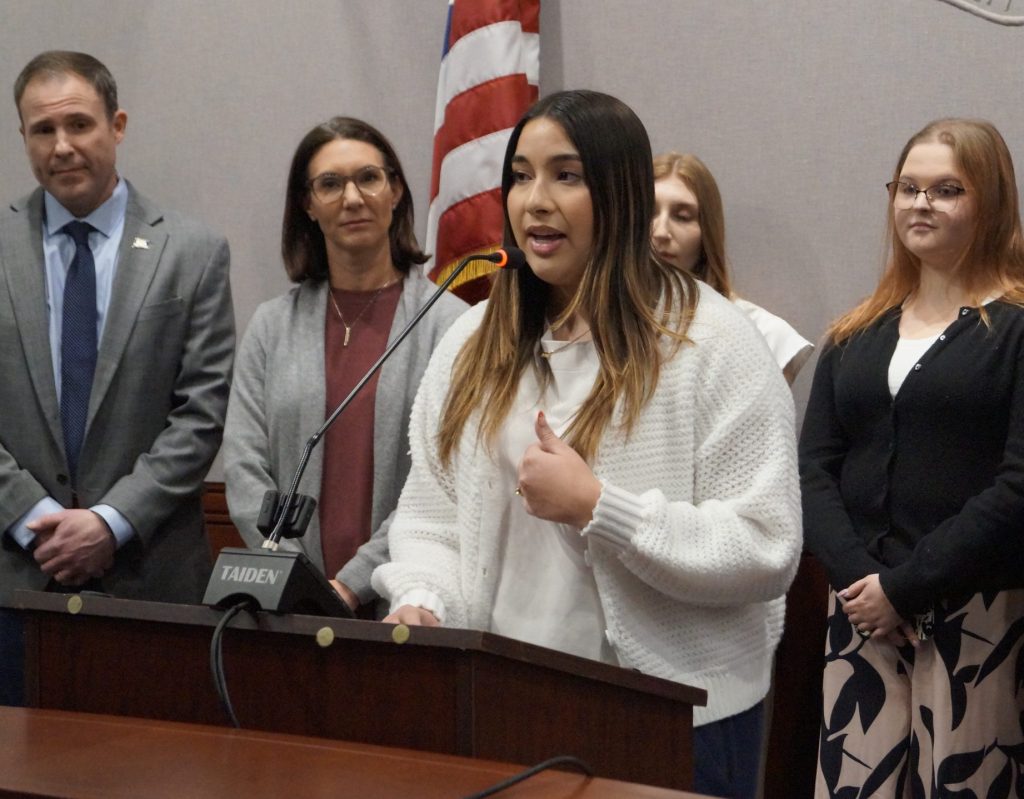
UConn sophomore Danyelix Echevarria Figueroa said that, instead of focusing on becoming the best teacher she can be, she will be forced to worry about how to make ends meet during her unpaid student teaching requirement.
“We would never tell aspiring architects or engineers that they have to do unpaid work,” said CEA President Kate Dias. “Paid internships are the norm in every other field, and this is particularly and historically true of male-dominated fields. Refusing to pay student teachers is a holdover from a time when educating children was considered women’s work, and women’s work was undervalued and underpaid—or completely unpaid.”
She added, “Paying our student teachers is a critical step toward showing we value their work and their chosen profession, and we have already seen paid residencies in other states demonstrate positive growth in teacher recruitment. Connecticut needs diverse teachers. We need special education teachers. We have a persistent educator shortage, and paying student teachers would be an important step toward addressing it.”
“Student teaching exploits aspiring educators for the work they do in classrooms, requiring them to work without pay for up to 40 hours a week, for months at a time, all while paying full tuition prices in order to do so,” said CEA Aspiring Educator Program Chair Hannah Spinner, a graduate student at UConn. “This creates financial hardships for student teachers and their families. I’ve hardly known a student teacher who isn’t weighed down by the stress of trying to balance this mandatory graduation requirement and support themselves at the same time. Those whose families lack the financial resources to help them pay tuition and living expenses for an entire semester of unpaid work often have to opt out of educator preparation programs, denying them a chance to pursue their professional goals.”
“Like many college students, I have bills—gas, fuel, tuition, and other living expenses,” said UConn sophomore Danyelix Echevarria Figueroa, the Aspiring Educator Program’s public relations chair. “Student teaching is time consuming and will take from the hours available to me to work in order to support myself. Instead of focusing completely on becoming the best teacher I can be, I will be forced to worry about how I’m going to make ends meet. That stress doesn’t make for better teachers. It makes for exhausted ones and also unmotivated ones.”
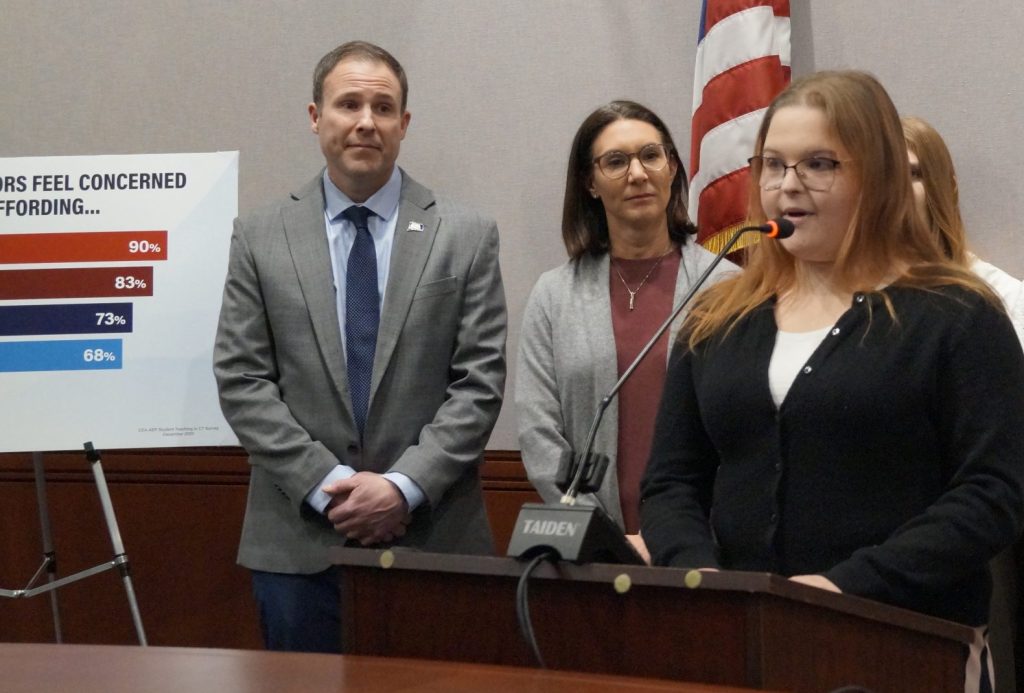
SCSU junior Madison Selander thanked legislators on the Education Committee for their support of a paid student teaching bill.
As is the case for many of her peers, SCSU junior Madison Selander, the Aspiring Educator Program’s secretary, says she’ll need to work another job to pay for daily necessities while student teaching instead of utilizing her time to show up as the best teacher she can be.
“I ask legislators to support paid student teaching for all aspiring educators,” she said. “Help us so we can perform to the best of our ability without worrying about working extra hours after the school day, and without fear of choosing between our students and putting food on the table.”
Members of the legislature’s Education Committee agreed that student teachers need financial support.
“Student teaching is an invaluable experience for our aspiring educators, one that helps to hone their skills and prepare them for a successful career in the classroom,” said Representative Jennifer Leeper, House chair of the Education Committee. “Unfortunately, rising higher education costs and the rapidly increasing cost of living are making it difficult for some of our brightest young people to make that commitment. Aspiring educators shouldn’t be locked out of the profession because they can’t financially bridge the gap of unpaid student teaching. A statewide paid student teaching program will help us support our aspiring educators as they develop these essential classroom skills. This program also sends the message that Connecticut values our educators and wants to attract the most talented and dedicated young people into the profession, which our students urgently need.”
“Paying student teachers is a key step toward addressing teacher shortages, and when future educators are expected to work full time without pay, many are pushed out before they ever enter the profession,” said Rep. Brown, the Education Committee’s vice chair and a CREC teacher. “When we remove barriers, we will have a more robust teacher workforce that reflects the students in their classrooms.”
Rep. Nick Menapace, a New London teacher and member of the Education Committee, remembered his own student teaching experience when his dedication to his students and late nights working a second job to make ends meet left him quite ill by the time standardized testing season arrived.
“We ask teachers to sacrifice so much for their students, and if we’re going to demand that level of commitment from this profession, I don’t think we can continue to ask student teachers to be unpaid because they are in the classroom doing the work of a full-time teacher. And not only are they unpaid, but they have to pay in order to continue to teach. It keeps talented people out of education.”
“We’re extremely grateful for the support of our Education Committee on a paid student teaching bill,” said Spinner. “In states that have adopted this practice, it has improved student teachers’ well-being, the educator pipeline, and educator diversity. Connecticut would benefit strongly in all these areas.”