
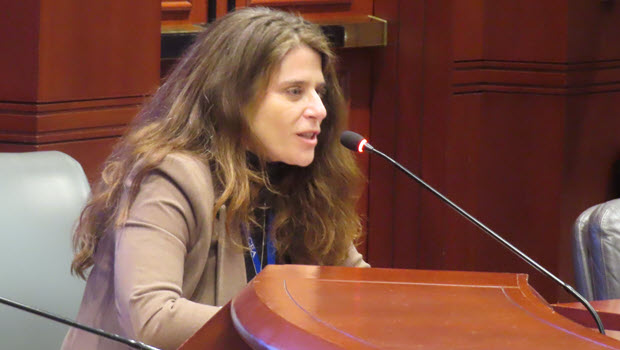
“As public school teachers, we need to know that we’re safe to come into work and do our jobs,” CEA Vice President Joslyn DeLancey told the legislature’s Government Oversight Committee during a public hearing today. “If we don’t feel safe, we can’t create the environment we want for our students.”
DeLancey was one of a number of CEA members testifying today on Senate Bill 325 An Act Prohibiting the Disclosure of the Residential Address of Public School Teachers Under the Freedom of Information Act. CEA members have been advocating for changes to prohibit their personal contact information from being shared automatically with anyone who requests it.
In recent years, there has been an increase in harassment and bullying directed at educators, and teachers have reported having to endure hateful messages, threats of violence, and false accusations from within the school community, as well as from outsiders. This behavior can lead to a culture of fear and intimidation, which impacts educators’ ability to do their jobs and results in many good teachers choosing to leave the profession.
“We go into this work because we care about kids, and we want them to be successful,” DeLancey said. “We are public servants, but that doesn’t mean the public should have access to our private information.”
She added that it makes sense for members of the public to have access to teachers’ work email addresses and phone numbers so they can reach teachers, but there is no need for the public to know where teachers live.
“In this day and age of rage-baiting politics and escalating online hostility, the risk is real,” said Newington teacher Jennifer Rodriguez. “Educators and other public servants are increasingly targeted. And when fear enters the equation, voices fall silent. You have asked educators like me to speak up. To share what is happening in schools. To advocate for students and families. But how can we do that fully and honestly if we fear the public may seek us out, show up at our homes, or retaliate in some way?”
“I don’t think our FOIA laws anticipated the age we’re living in today,” said CEA President Kate Dias. “I have had educators who moved out of the community where they taught because their address was made public. That shouldn’t happen. If you’re an educator, we want you living in the communities you’re serving, but when your privacy is violated that way, you just don’t feel safe.”
Glastonbury Education Association President Kristen Basiaga told legislators that when she surveyed her 500 members about their legislative priorities, privacy protections was one of their top concerns—along with issues like pension funding and special education caseloads.
“According to Education Week, one in 20 teachers say their personal information has been released against their will. Protections from FOIA requests are one step we can take to help our teachers feel like we can do our best in the classroom without fear for our safety or the safety of our families,” she said.
Basiaga said that a few years ago, a teacher she knows had her full name and addressed published in a newspaper after they were obtained by a reporter via a FOIA request. The article upset some readers, and as a result, the teacher felt threatened and upset in her own home. After a long career in special education, the teacher chose to retire.
“There are educators who would still be in this field if FOIA protections were in place,” Basiaga said. “As a teacher or public servant, it is more dangerous now than ever.”
“Times are complicated, and drawing people into our profession is really important,” Dias said. “We have to make sure they feel safe and protected and that the work that they’re doing is not going to lead to harm to themselves or their families. FOIA protections are only part of this puzzle, but they’re an important statement to make to indicate that public employees deserve a level of privacy.”
Subscribe to the CEA Daily for more about education issues before the Connecticut legislature during the 2026 session.