
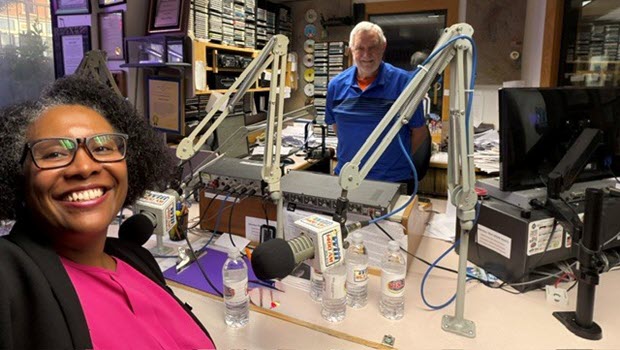
When the legislature convenes again in January, screens in schools is likely to be a hot topic, and it’s an issue many educators have strong feelings about. CEA Secretary Gail Jorden recently discussed her thoughts on the issue with Wayne Norman on WILI 1400AM and 95.3FM.
Last legislative session, a bell-to-bell cell phone ban nearly passed the Connecticut General Assembly, and lawmakers are expected to propose a bill on the topic again this year.
“Not having students on their cell phones from the moment they step into the building to the moment they leave the building is a game changer,” Jorden says. “There are different schools across the state that have already put this into place. We’re looking for some legislation to really back up and strengthen school policies so that students aren’t on their cell phones during the school day. That vibration in the pocket, it’s very addictive.”
Beyond just removing cell phones from schools, the Screen Smart Initiative is also looking at reducing the use of educational technology in schools.
“There’s more of a push to remove screens in the lower grades than in the higher grades, but overall, the movement is trying to get away from that need to have screens in our hands all the time,” Jorden says. “If a child is simply on a screen all day long, they aren’t building those relationships skills. That’s a huge piece that’s missing.”
She adds, “Technology needs to be used as a tool. And with that tool, teachers need to have some autonomy with how they utilize that tool within their classroom. We’re big on differentiation, which is the skill of looking at every student and deciding what every student needs. There are some students that need modifications with the use of technology more than others, and we need to be mindful of that. If all we’re thinking about is getting screens out of kids’ hands completely, that may harm some students and classrooms. We have to be really practical with our use of technology.”
While she recognizes concerns about an overreliance on educational technology, Jorden says she doesn’t think swinging back to only using paper and pencil is the answer either. “We really have to be very mindful with how we’re using technology. It’s a problem that needs to be solved. Our students lack stamina when it comes to even reading simple texts.”
Even though districts have firewalls to block inappropriate content and sometimes provide tools for educators to see what is happening on every student’s screen, nothing is perfect, Jorden notes.
“If a child can get around it, they will certainly try and get around it,” she says.
In Jared Cooney Horvath’s book Digital Delusion, he writes that when students use computers during class time for assignments, they will be off task for 38 minutes of every hour.
“That’s stunning,” Jorden says. “That is what this initiative is all about.”
Listen to the full show to hear more about Jorden’s take on screens in schools as well as her comments on the federal voucher program, educator shortages, and education funding.