

“The only way to make any real change is to actually talk to your legislators and change the laws that affect teachers,” said Stamford educator Elaine Gencarelli. “Anytime you want to move forward, you can’t just complain about it. You actually have to talk to the people who have control over the things that control you.”
Gencarelli was one of the more than 150 CEA members who came together this morning for an experience members called educational and empowering. CEA’s Breakfast with Legislators allowed members to share why educators need a fair process in teacher terminations, privacy protections, paid student teaching, increases to education funding, and more directly with lawmakers.
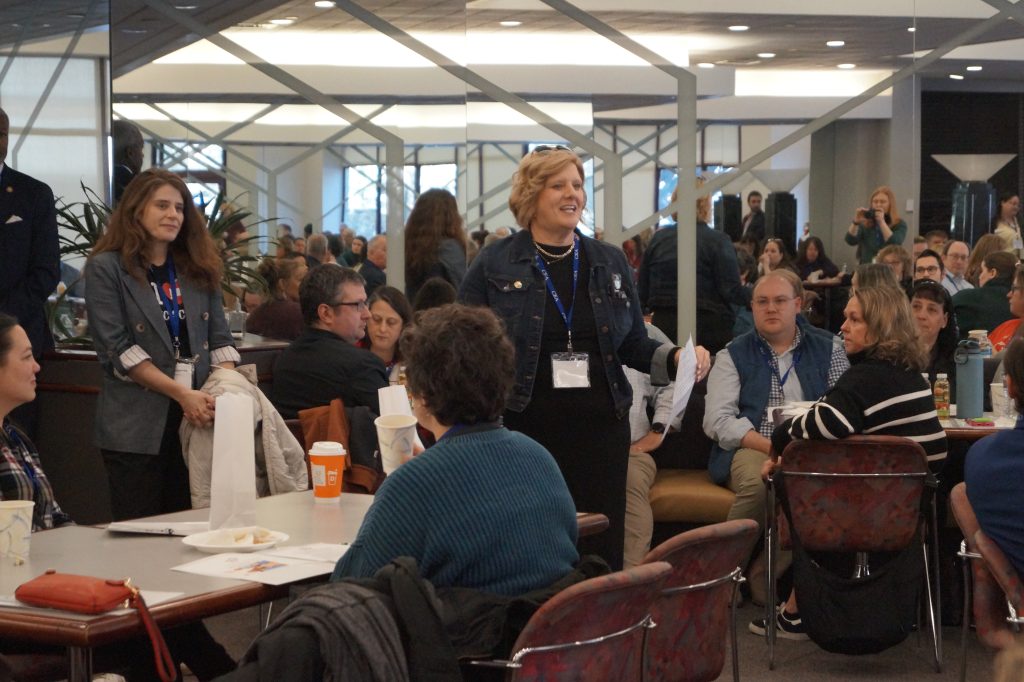
CEA President Kate Dias and Vice President Joslyn DeLancey welcome members to CEA’s Breakfast with Legislators.
“It’s really important that legislators know what’s important to teachers. How can they know what’s impacting us in our classrooms if they don’t hear from us?” said Stamford teacher Michelle Pusser.
“Everyone who’s come out today is here because something on CEA’s legislative agenda matters to them— something on this agenda is what they want to see happen and would make a big difference to them and their students,” said CEA President Kate Dias.
Legislators who attended the event were Senate President Martin Looney, Senator Julie Kushner, and Reps Patrick Biggins, Kevin Brown, Kate Farrar, Jack Fazzino, Dan Gaiewski, Ken Gucker, Bill Heffernan, Geoff Luxenberg, Nick Menapace, Ron Napoli, Iris Sanchez, John Santanella, Hilda Santiago, and Laurie Sweet.
Fair process
“The changes we’re asking for to ensure a fair process and binding arbitration in teacher termination proceedings don’t give us more rights; they give us the same rights as every other board of ed employee,” Dias told legislators.
For most state and public employees, discipline is carried out according to a recognized legal standard called just cause. This standard ensures that the process is fair, any resulting discipline is proportionate, and that due consideration is given to the evidence, facts, and circumstances surrounding that employee’s dismissal. Teachers aren’t afforded just cause when their jobs are on the line, and several bills before the legislature have language that would fix that.
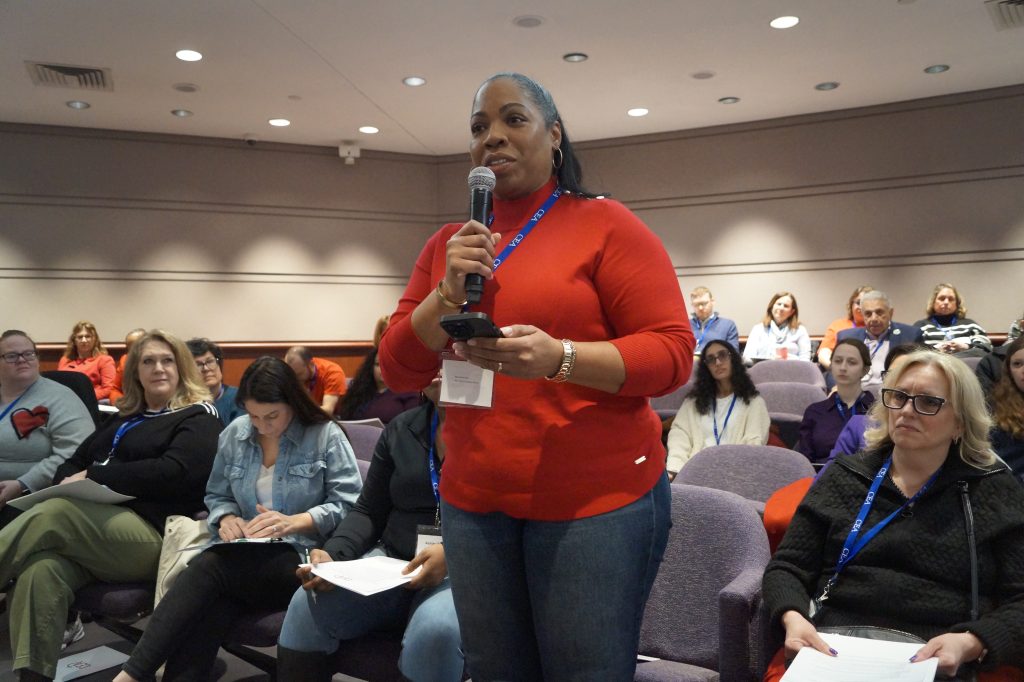
Greenwich teacher Joy Colon talked to legislators about the need for fair process in teacher terminations.
“Like many educators, I worry about how easily a career built over decades can be threatened without a fair and consistent process,” said Greenwich teacher Joy Colon. “Binding decisions should rest in the hands of neutral hearing officers so that good teachers are not lost to political attacks or unfounded accusations.”
“We need to make sure we’re giving teachers the ability to confidently do their jobs without fear that they’re going to lose them if something comes up in class that ends up getting debated on the town Facebook page later on,” said Avon Education Association President Jon Moss.
The legislature’s Labor Committee will hold a public hearing on Tuesday, March 3, on this issue, building on the Education Committee’s hearing last week. Read more and share your story.
Privacy protections
Educators are also calling to exempt teachers’ and other public employees’ personal contact information from disclosure under the Freedom of Information Act. Teachers said that in the current political climate, knowing that any parent, or a student through their parent, can gain access to their home address and phone number is concerning.
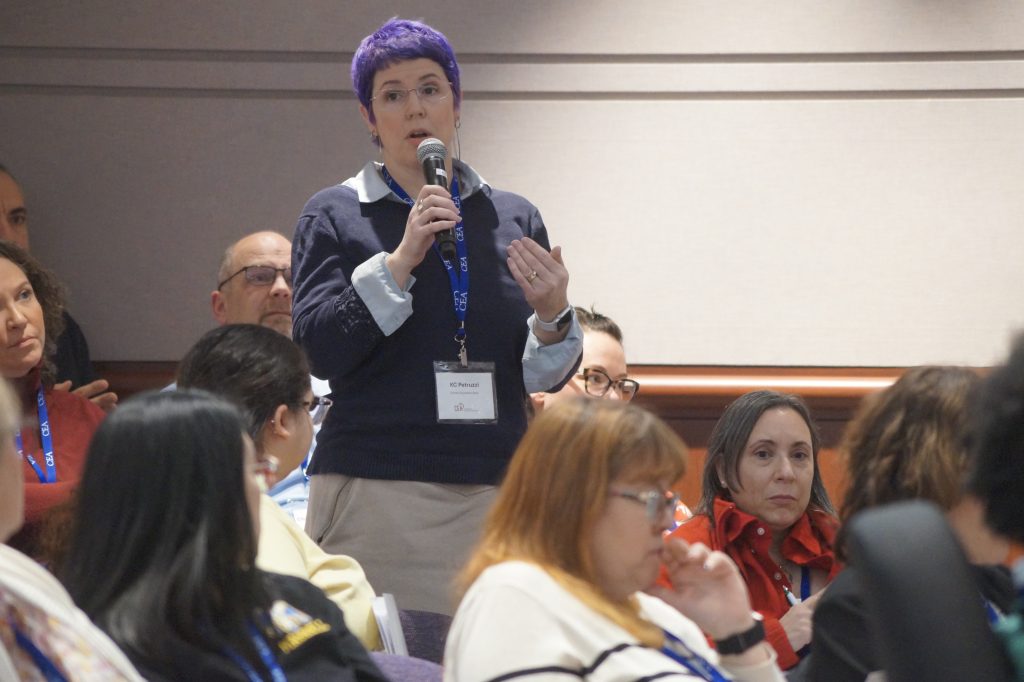
Granby Education Association President KC Petruzzi explained to legislators why teachers’ privacy needs to be protected.
Granby Education Association President KC Petruzzi said that in her town residents have come to public meetings and called out individual teachers by name.
“When teachers have had our names called out, it makes us nervous because we don’t know what these community members will do next,” she said.
Greenwich Education Association President Margaret Jenkins asked legislators to consider that information that can be accessed by adults through Freedom of Information Act requests does not necessarily stay with the adults.
“Students have access through their parents to this information, and we have seen teachers’ personal safety be threatened by students.”
The legislature’s Government Oversight Committee will hold a public hearing on Tuesday, March 3, on Freedom of Information protections for teachers. Read more and share your story.
Stipend for student teachers
“We’ve seen a 15% decrease in our teacher preparation program enrollment numbers,” said CEA Aspiring Educators Program Chair Hannah Spinner, a UConn graduate student. “We’re not compensated for the 40 hours a week, every week, we work for our student teaching. That is at least 400 hours that we work unpaid, and then we also have to work a job on top of that, if we’re even allowed to do so, in order to pay our bills.”

Labor Committee Chair and Education Committee Member Senator Julie Kushner and CREC teacher and Education Committee Vice Chair Rep. Kevin Brown were two of the 16 legislators to attend the event.
A bill before the legislature would provide a stipend of $1,000 per week for every student enrolled in a teacher prep program who takes part in a student teaching experience at a public school in the state and who goes on to work in Connecticut public schools for at last two years following graduation.
“Many of our aspiring educators live in their cars and have several jobs to make ends meet,” said Newington teacher Elsa Batista. “If this were your child wanting to go into education, wouldn’t you want them to focus on their academics instead of how they are going to eat?”
CEA Aspiring Educators Program Secretary Madison Selander said that she will soon be doing her student teaching. “My biggest worry is how I’m going to put food on the table,” she said.
She wants to be a special education teacher and currently works as a paraeducator in a public school, but won’t be able to keep that job once she starts student teaching.
Education funding
The Education Cost Sharing formula, the means by which most state education funding is distributed to districts, has not adequately kept up with inflation leaving districts underfunded year after year. Rising costs for special education, transportation, instructional materials, and staffing continue to strain local budgets, forcing districts to make difficult choices that directly impact classrooms. Educators say that updating the formula is essential to keeping pace with the real cost of educating students today.

CEA-Retired member Vincenza Mazzone-McNulty greets Rep. Patrick Biggins.
“I have an 11-year-old daughter, and the ECS formula hasn’t changed since she was born,” said Manchester Education Association President James Tierinni. “Everything is more expensive now, and we can’t afford to fund education at the same level we did over a decade ago.”
“When the ECS formula falls short, the funding burden shifts to towns and local taxpayers,” said South Windsor teacher and Enfield Board of Education member Kelsey McGuire-Bruce. “Public education is a shared responsibility, and it cannot continue to fall more and more onto municipalities. To ensure quality education for all students, the state must provide sufficient support.”
The Education Committee is holding a public hearing this Wednesday, March 4, on two important bills to modernize Connecticut’s Education Cost Sharing formula. Learn more and sign up to testify.
Read more about the CEA Breakfast with Legislators in the next issue of the CEA Advisor.