
The prolonged government shutdown this fall had wide-reaching effects on nearly every aspect of society—one of the worst of which was the lapse on November 1 in Supplemental Nutrition Assistance Program (SNAP) benefits for tens of millions of Americans for the first time in the program’s history.
For many families, SNAP benefits are the main source of money for food.
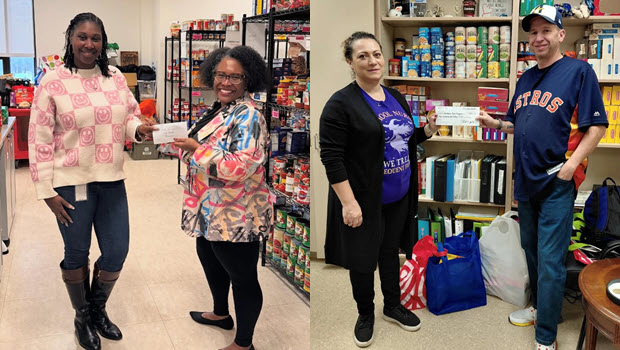
To help those in Connecticut at risk of going hungry, CEA not only made a $1,000 donation to Foodshare this fall but also launched a challenge for every local education association, the business community, and staff to donate nonperishable food items or make financial contributions to Foodshare.
“In typical teacher fashion,” said CEA President Kate Dias, “we decided to make this interesting. Everyone who donated and posted about it on Facebook or Instagram was eligible for a chance to win a happy hour for their entire association.”
The link CEA set up for donations resulted in thousands of dollars going to food banks, including sizeable contributions from the Bloomfield Education Association, Gilbert Education Association, Killingly Education Association, NEA
Danbury, and others. CEA held a random drawing on December 2, and GEA was the lucky winner.
“We have many families at the Gilbert School that need our help on a weekly basis, and with the state of affairs across our country, we wanted to be able to give more,” says GEA President Chris Affie.
“Programs such as SNAP are lifelines, and we refuse to let gridlock in Washington, D.C., jeopardize our students’ health and safety,” says CEA Vice President Joslyn DeLancey.
In Connecticut alone, more than 390,000 residents rely on SNAP benefits, and a third of those—129,000—are children. What’s more, cuts to programs like SNAP and Medicaid reduce the number of children eligible for free school meals, which, in turn, threatens a school’s ability to offer free meals to all students.
“When funding is gutted, educators stand in the gaps for their students,” says Dias. “This is not how we want it to be, but it’s increasingly our reality. We’re proud of our amazing members and community allies. Together, through CEA’s
Foodshare challenge, we collected enough donations to provide 10,000 meals this season.”
She adds, “What we are fighting for this legislative session—and in fact every day—is for an environment in which educators can focus on what they’ve been professionally trained and hired to do: educate. But we also know that students who aren’t eating aren’t learning.”