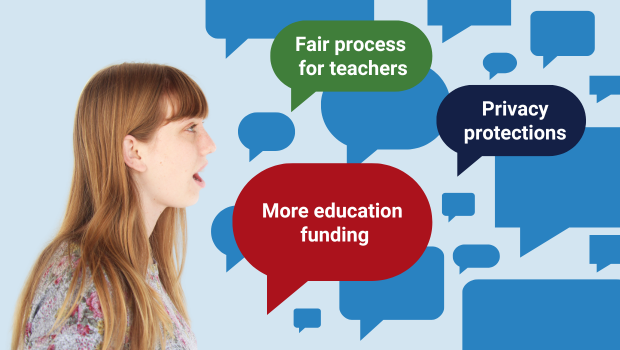
The legislature has three public hearings this week on bills related to fair process in teacher terminations, privacy protections for teachers, and education funding. This is your chance to speak out and be heard.
By submitting testimony into the legislative record, you help make sure legislators understand why certain bills are such a priority for educators. Testimony isn’t just a formality—it’s one of the most effective ways to influence policy.
When educators share their experiences, it adds real-world perspective that can influence decisions, shape amendments, and strengthen the case for policies that support students and schools.
Fair Process for Teachers
The Labor Committee is holding a public hearing on Tuesday, March 3, on bills that would ensure a fair termination process for educators, building on a bill on the same topic heard by the Education Committee last week.
For most state and public employees, discipline is carried out according to a recognized legal standard called just cause. This standard ensures that the process is fair, any resulting discipline is proportionate, and that due consideration is given to the evidence, facts, and circumstances surrounding that employee’s dismissal. Teachers aren’t afforded just cause when their jobs are on the line, and several bills before the legislature have language that would fix that.
Privacy Protections
The legislature’s Government Oversight Committee will hold a public hearing on Tuesday, March 3, on Freedom of Information protections for teachers.
Educators are calling to exempt teachers’ and other public employees’ personal contact information from disclosure under the Freedom of Information Act. Teachers say that, in the current political climate, knowing that any parent, or a student through their parent, can gain access to their home contact info is concerning.
Education Funding
The Education Committee is holding a public hearing on Wednesday, March 4, on two important bills to modernize the primary state education funding grant to districts, the Education Cost Sharing (ECS) formula.
As educators, we know how funding affects class sizes, staffing, student supports, and the stability of our schools. These bills take critical first steps toward ensuring districts receive fair, predictable funding. They help update the formula to reflect the real cost of educating students as inflation and other expenses rise.
While these proposals may need further refinement, they represent meaningful progress toward a more equitable and modern school funding system.
Please share your comments or personal stories about why stronger, more reliable funding matters for you, your classroom, and your students.