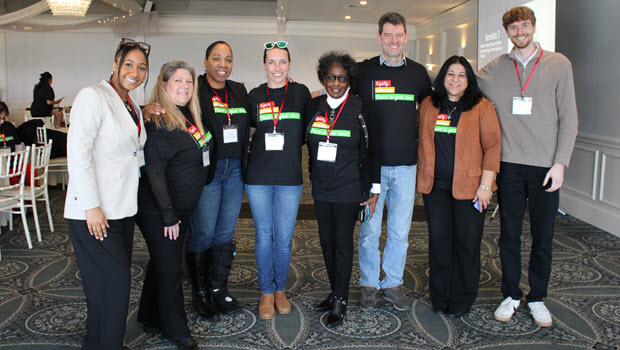
“We have teachers in this room who experienced a time when we still had segregated schools, and I think, ‘Wow, we’ve come a long way,’” said CEA Vice President Joslyn DeLancey in her leadership address at last weekend’s fourth annual CEA Summit on Diversity. “And then I think about where we are now and the disparity and lack of funding and support that so many of our students and educators are facing, and I realize that we still have a long way to go and a lot of work to do. That’s why I’m so excited to see this room full, and more people attending this event every year.”
The Summit, organized by CEA’s Racial and Ethnic Diversity Affairs Commission and held at Amarante’s Sea Cliff in New Haven, centered on elevating racially and ethnically diverse voices, supporting educators of diverse student populations, and building leadership pathways that drive meaningful change in schools, unions, and communities. Nearly 100 educators from across the state joined together for a powerful day of connection, leadership, and storytelling focused on equity and belonging in education. Congresswoman Jahana Hayes was set to be the keynote speaker at the event, but she was held up in Washington, D.C., for an important vote. She shared a video with attendees expressing her apologies and encouraging all educators in the room to continue to use their voice.
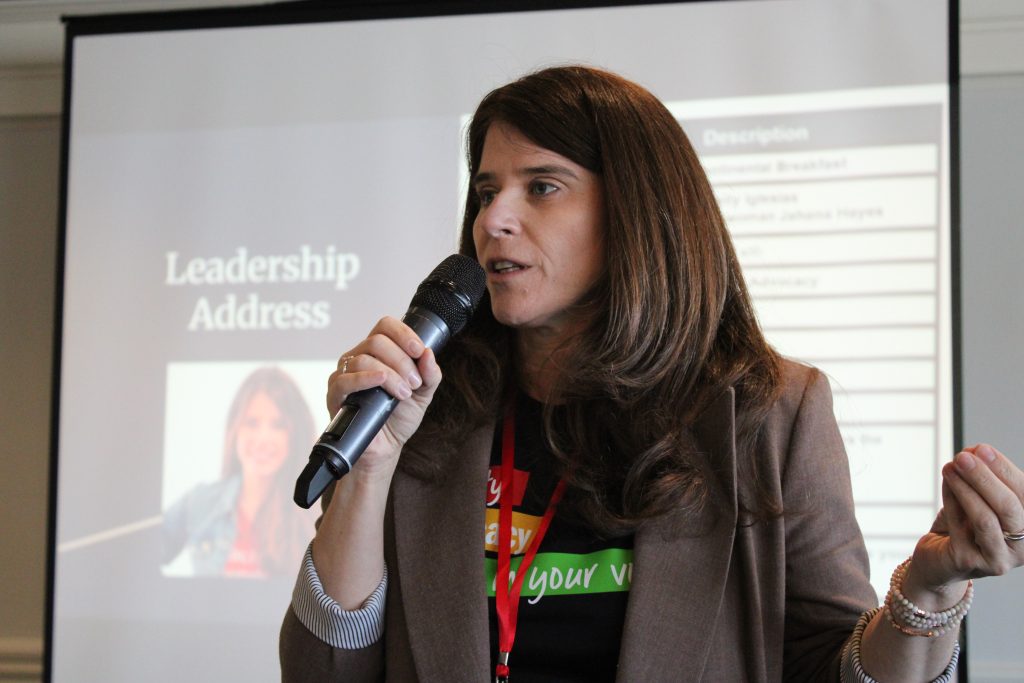
CEA Vice President Joslyn DeLancey said she was excited by the turnout for CEA’s Summit on Diversity and that more members attend each year.
However, Congresswoman Hayes was not the only scheduled lawmaker. State Senator Sujata Gadkar-Wilcox, who represents Bridgeport, Trumbull, and Monroe and serves on the Education Committee, told her story of facing adversity and breaking barriers in education and politics.
“I am the first south Asian woman in the State Senate, and it makes a difference,” explained Gadkar-Wilcox during a conversation on messaging moderated by CEA Legislative Coordinator Louis Rosado Burch. “There are only two women of color in the Senate, so we’re still dealing with that disparity. I have so many young women of color come up to me and say, ‘I see myself in your story.’ It is important to have that kind of representation. Diversity matters, regardless of what we’re hearing from the Whitehouse, and you can’t erase it. We need to talk more about how we can protect it.”
Senator Gadkar-Wilcox continued the conversation by discussing some of her favorite CEA events and how they help bridge the divide between legislators and their constituents, particularly educators.
“I loved the Take Your Legislator to Work Day because I think it can give a real window into the classroom for those who are not educators, which is important,” said Gadkar-Wilcox. She also gave advice for how educators can get their message across to lawmakers through creating legislative agendas fighting for key issues, pre-planning conversations and messaging, staying in contact throughout the year with legislators to discuss what is important, and building relationships early on.
“Invest your time by building relationships with people who are up and coming, who are newer to legislative committees, and who will then advocate for you and for education,” said Gadkar-Wilcox. “I see new members of the House, for example, who are eager to talk about education and support funding. It takes more than one legislator to push. And you need that push on a priority issue to get people to perk up and pay attention.”
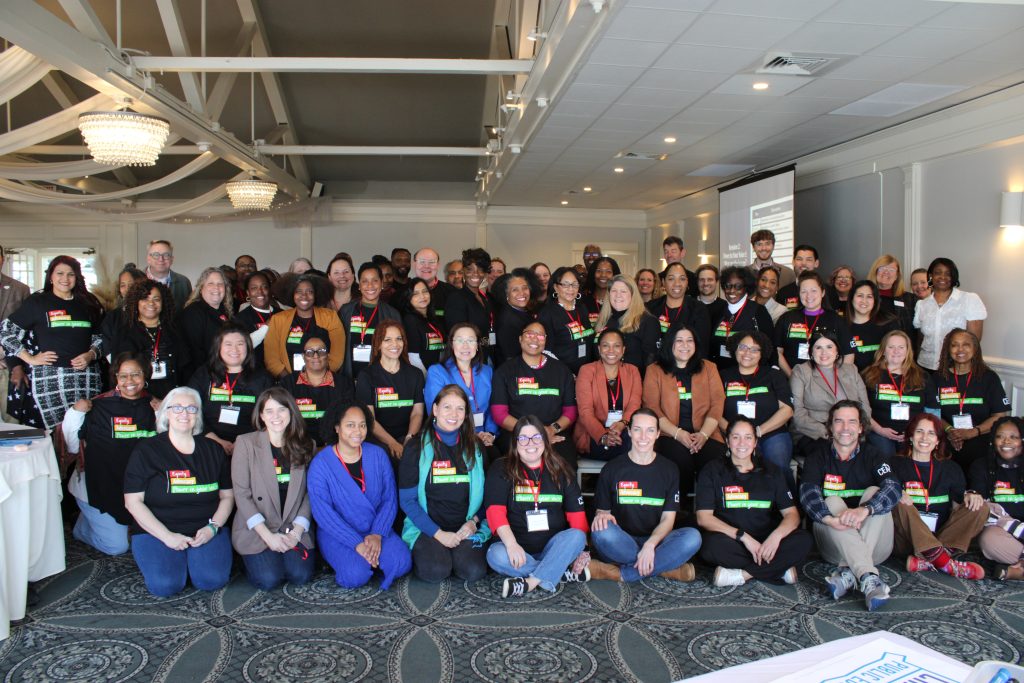 Along with a rundown of CEA’s legislative agenda and an explanation of the bills the organization is lobbying for this year, the day focused on messaging and how members can come together to make their communication more effective to create change, a sentiment DeLancey touched on in her leadership address.
“We hear the word ‘great’ thrown around a lot these days, and I don’t think those speaking necessarily know what great means,” said DeLancey. “We do have some great things going on in our world right now. We have great divisive behavior. We have great discrimination. We have great fear. We have great abuse of power. We have a great many things going on. And I think through the power of our union, we can redefine and re-envision what that great means. Because within our association, we have great care, we have great community, we have great wisdom, and we have great love for the work that we do, for our students, and for our colleagues. So, we get to define what great is, but we must do it together.”
Read more about the CEA Summit on Diversity in the next issue of the CEA Advisor.