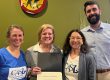

Educators across Connecticut demonstrated the power of collective action and the growing influence of teacher leadership in local government during the 2025 municipal elections. Fifty-seven educators were elected to serve their communities, and many local associations worked together to ensure education-friendly candidates were elected to office.
Seeking rapid support amid growing frustration with local government decisions and a lack of transparency, the Rocky Hill Teachers Association (RHTA) contacted CEA in early October for help with municipal elections, marking the first time in recent history that they had engaged at this level. Within eight days, CEA staff worked with RHTA to develop and adopt candidate endorsement procedures, distribute and collect candidate questionnaires, and endorse what would turn out to be the winning slates for mayor, town council, and board of education.
“These first-ever endorsements generated significant community attention—including pushback from local officials,” says RHTA President Douglas Russell, adding, “Importantly, they resulted in a significant sweep. Endorsed candidates won across the board, marking the first time in over a decade that education-friendly government leaders gained control in Rocky Hill.”
Similarly, efforts by the Stamford Education Association (SEA) ensured the incumbent board of education chair, who for years had not been supportive of educators, lost his bid for re-election. SEA built upon its history of political involvement to respond to escalating tensions with the board of education and superintendent, strengthening its political action committee, hosting a public candidate forum, creating a board of education report card, and making its positions public.
“The results were decisive,” says SEA President John Corcoran. “The board chair lost his seat, demonstrating the profound impact local associations can have when we organize effectively and with community stakeholders.”
Stamford’s push paid off earlier this month when the Stamford Board of Education—which includes several newly sworn-in members—finally voted overwhelmingly, and in a bipartisan manner, to abandon the widely controversial high school schedule currently in place and restore the A/B eight-period schedule educators have been calling for.
“The new board trusts educators, and its members consult with us,” Corcoran says. “In the two months since they were elected, they’ve gone out to our schools and talked face to face with school counselors, students, teachers, parents, and schedule developers. We have gotten more done with the new board in the last month than we had with previous boards in years, and that’s exciting. This is what can happen when we work together and persist. We need those good relationships and the ability to discuss challenges, talk about solutions, and bounce ideas off each other. I’m proud of my colleagues and educators all around our state fighting similar battles. It can seem like you’re never going to win, like you’re outnumbered or outranked, but educators standing together are a powerhouse. We did it.”
“This year’s elections underscored what’s possible when educators organize, communicate, and lead,” said CEA President Kate Dias. “CEA’s member-centered approach, combining grassroots engagement, leadership development, and strategic support, has resulted in historic levels of educator representation across Connecticut.”