
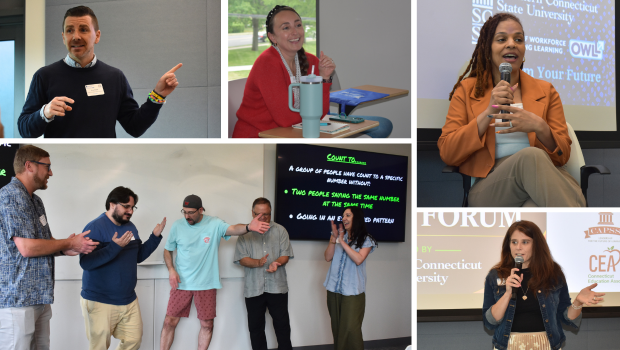
Cold coffee.
Missing pencils.
Disengagement.
“Is this for a grade?”
Overwhelming workloads.
Endless paperwork.
Out-of-pocket spending.
Behavior management.
High-stakes testing.
Data obsession.
Unrealistic expectations.
Lack of support.
Tech glitches.
Administrative pressure.
Class coverage.
Being called bruh.
Student trauma.
Burnout.
In addition to these and other realities educators face, 2026 Connecticut Teacher of the Year Brian Betesh gave a nod to an equally long list of rewards that come with the profession in his keynote address at the 10th annual Teacher Leader Forum, May 21.
Hosted by the Teacher Leader Fellowship Academy (TLFA) in partnership with CEA, the event brought together educators and administrators at Southern Connecticut State University for a day of learning, connection, and collaboration.
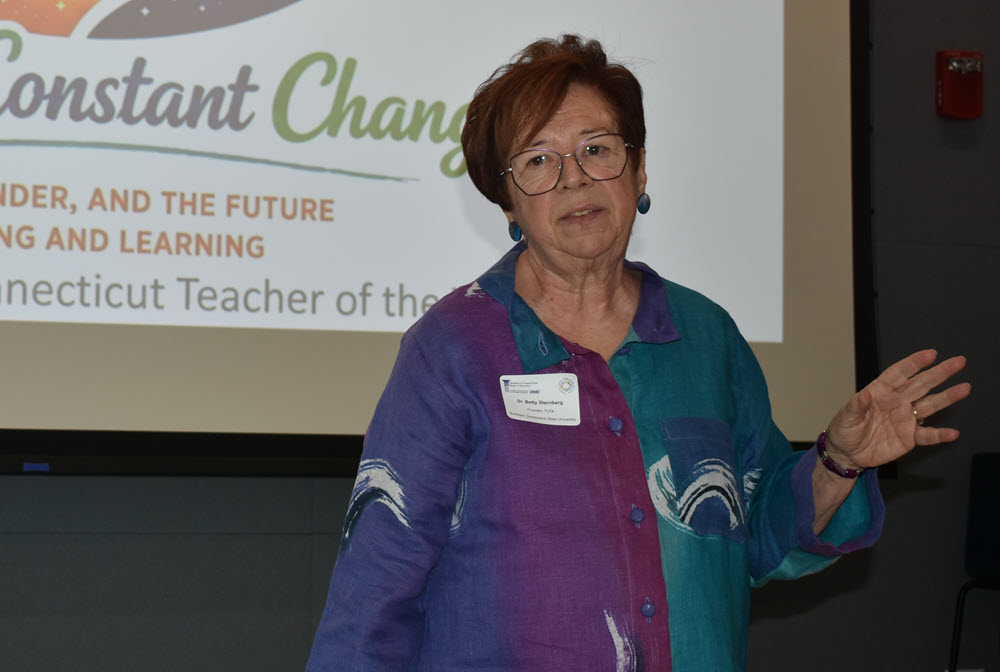
TLFA Director and Connecticut Commissioner of Education Emeritus Dr. Betty J. Sternberg.
“Continuing our tradition of elevating teacher voice, advancing leadership, and fostering meaningful professional dialogue, this year’s forum centers on the theme Thriving in Constant Change: Wellness, Wonder, and the Future of Teaching and Learning,” said TLFA Director and Connecticut Commissioner of Education Emeritus Dr. Betty J. Sternberg.
The day’s topics included
- School communities that are relationship‑driven and promote belonging, well-being, and resilience for students and educators
- Neurodiverse and multilingual learners supported through equitable practices, differentiated instruction, reflective practice, project-based learning, culturally responsive teaching, cognitive science, and a deeper understanding of students’ whole lived experiences
- Global insights into education from countries with innovative policies and strong educational outcomes
- AI and other technologies integrated into learning and instructional practices in ways that prioritize critical thinking and are responsible, ethical, and developmentally appropriate
Best-laid plans
“As you embark on this day of learning, I’d like to share an anecdote that speaks to what it means to become a teacher leader,” said CEA Vice President Joslyn DeLancey. “Seven years ago, I was teaching fifth grade in Darien, and our principal called everyone in to meet with her about a plan for involuntary teacher transfers. She started with the question, ‘Where do you see yourself in five years?’”
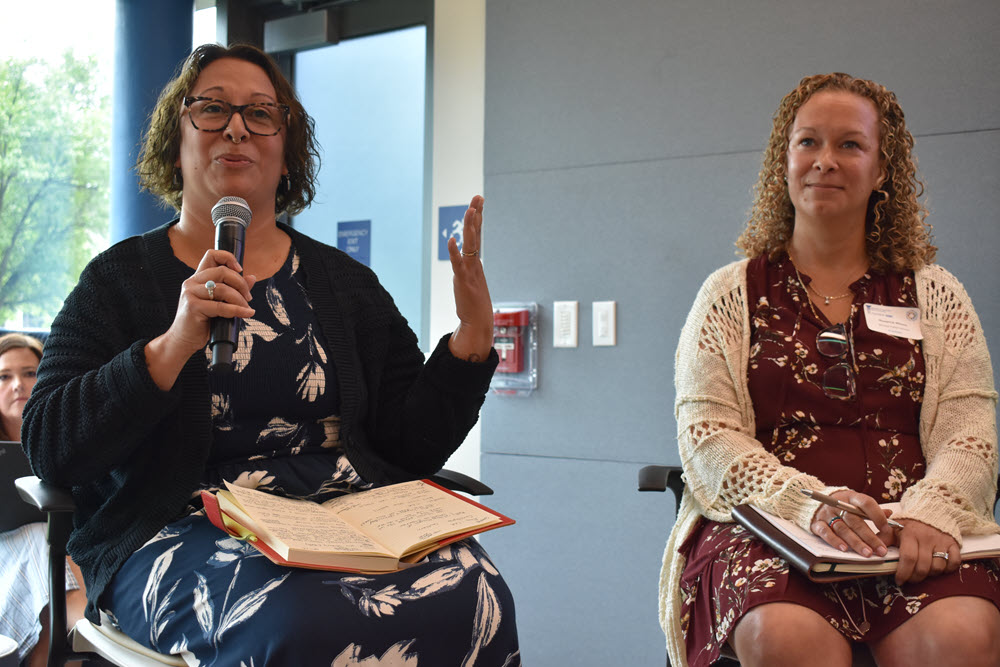 DeLancey’s answer frustrated her administrator.
“I had no clue,” she explains. “In five years I might be a fifth-grade teacher. I had my 092 and thought, maybe I’ll be an assistant principal. Maybe I’ll be living in France! In other words, I didn’t have my path.”
Being active and passionate about what you hope to achieve is important, she said, but limiting yourself to a prescribed path can limit your leadership potential.
“While it’s a fair question to examine where you want to be in five years, I never would have been able to say I’m going to be the vice president of an organization that represents 43,000 educators. I wouldn’t be able to say I’m going to get pre-K and kindergarten play-based learning enacted into law, or I’m going to help get teachers their Social Security benefits. These were things I was able to do because I didn’t limit myself to a certain path. I let myself be inspired and work on the leadership skills I knew would take me places: building relationships, asking good questions, saying no, saying yes, being creative, and taking risks. As I sit here in a room full of teacher leaders, I think it’s important to know that the position you have isn’t what makes you a leader. Leadership is being impactful, being a mentor, being inspirational, and creating change that moves us all forward, including our colleagues and our students.”
The power of connection
That sort of leadership—creative, collaborative, inspirational—is what helped earn Brian Betesh the title of Connecticut Teacher of the Year, an honor he’s quick to share with educators across the state. A 19-year veteran social studies teacher at Rogers Park Middle School in Danbury, where he himself was raised and educated, he acknowledges that his city is “surrounded by towns with more money, more resources, and more opportunities for their students,” adding, “It drives me to ask, ‘Why don’t our students have those same opportunities and resources?’ Kids shouldn’t be defined by the invisible lines they live within.”
 The pandemic in particular gave educators like Betesh a look into the hidden challenges students face outside the classroom.
“I thought I knew what kids were dealing with, but I didn’t,” he recalled. “Some had their cameras and mics off. One student’s learning space was in front of a bar stocked with alcohol. One girl answered a question and then quickly muted when her family raised their voices in the background, creating a chaotic environment for her. There were students with no computers and no Wi-Fi.”
The story that sticks most for Betesh during that time regards a child who joined his Google Meet in her winter jacket, outdoors. A newcomer to the U.S., she spoke very little English. Through translations, he learned that she was catching a Wi-Fi signal by positioning herself outside her neighbor’s home, in the freezing cold.
The harsh realities of what students face, and what educators face, can easily lead to burnout, says Betesh, unless you zero in on your work’s meaning, how to make change, and how to do it together.
“I’ve focused on improving curriculum for my students, building relationships with them, creating a school that feels like home, and being a good colleague to my fellow teachers. I’ve put effort into transforming my classroom and our school community into a student-centered hub where every child is empowered to shine.”
 With his encouragement and guidance, students formed Park 21, a club whose projects have included
- Collecting school supplies and filling monthly giveaway bags for students in need
- Assembling classroom carts with stress balls, fidget spinners, and coloring pages, as well as “kindness carts” stocked with snacks and other treats for students in self-contained classrooms
- Outdoor classrooms and a rock garden with positive messages
- Flipping indoor classrooms, HGTV-style, with fresh coats of paint, LED lights, cultural flags, and other items on teachers’ wish lists
- Building storage for the musical theater department
- Fundraising for games and athletic equipment for their school
- Posting hallway notes of praise for school staff
- Creating a coffee bar where teachers place their orders, and hot drinks are delivered by student baristas (Goodbye, cold coffee!)
- Hosting a school-based podcast—Rogers That!—with hundreds of guests, including best-selling authors, actors, major league soccer and baseball players, professionals from a variety of careers including (of course) teachers, and recently, former U.S. Education Secretary Dr. Miguel Cardona (Watch and listen.)
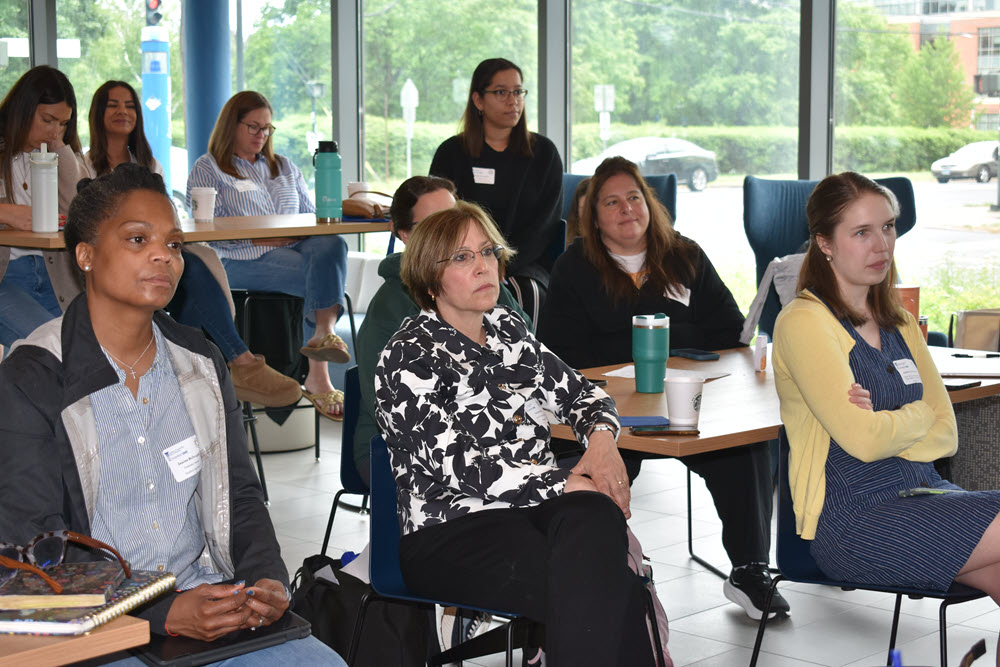
Like Betesh, educators from across the state shared their experience cultivating communities of care and connection, championing neurodiverse and multilingual learners, extending teacher influence beyond classroom walls, leading responsible tech use in schools, and understanding the role of unions in these and other areas. The Teacher Leader Forum included panel and roundtable discussions as well as nearly a dozen breakout sessions.