
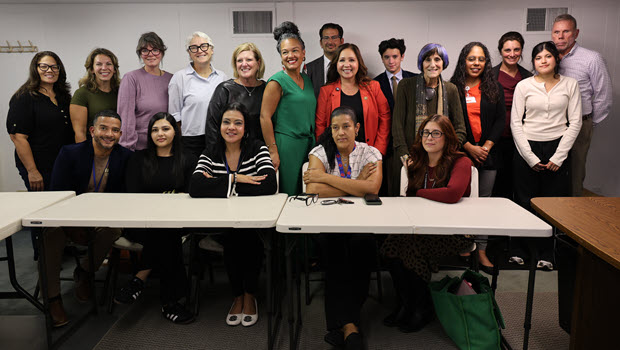
Teachers, parents, advocates, and local leaders, including CEA President Kate Dias, came together yesterday for a roundtable discussion with U.S. Representatives Rosa DeLauro and Adelita Grijalva on the impact of federal policies on Connecticut schools. The event, held at Junta for Progressive Action in New Haven, focused on the negative impact of federal budget cuts, immigration enforcement, and the national voucher program, and what Connecticut schools and communities can do to fight back.
“We’re here because of what this administration is doing to public education; it’s not just cutting but a fundamental view to dismantling,” DeLauro told the group. “In March, the president signed an executive order. He directed the administration to dismantle the department of education, and they are working furiously at this. They’ve reduced the workforce in half and transferred core functions to other agencies.”
DeLauro said that President Trump’s proposed 2027 budget would slash more than $8 billion from public education.
As a member of the Appropriations Committee, DeLauro, who is slated to become chair of that committee in 2027 if Democrats win a majority in the House in November, said she is committed to doing everything she can to ensure public schools get what they need to educate every child. “With regard to appropriations, I will continue to fight for public education,” she said.
DeLauro introduced her friend and colleague Congresswoman Grijalva from Arizona as an outstanding advocate for students and public schools.
“I served on a school board for 20 years, and having had the opportunity to talk to students, teachers, and administrators—what we’re seeing is a systematic starvation of our public education system,” Grijalva said. “Part of my frustration is we have people making decisions about investing in public schools who do not send their kids to public school.”
Investing in immigrants
Grijalva explained that her grandfather was a bracero—an immigrant agricultural worker from Mexico—while his son, her father, became a U.S. Congressman.
“That happened in one generation because of public education. Public education opens doors to opportunities that wouldn’t happen otherwise, and our job is to make sure we fully fund our public education system,” she said.
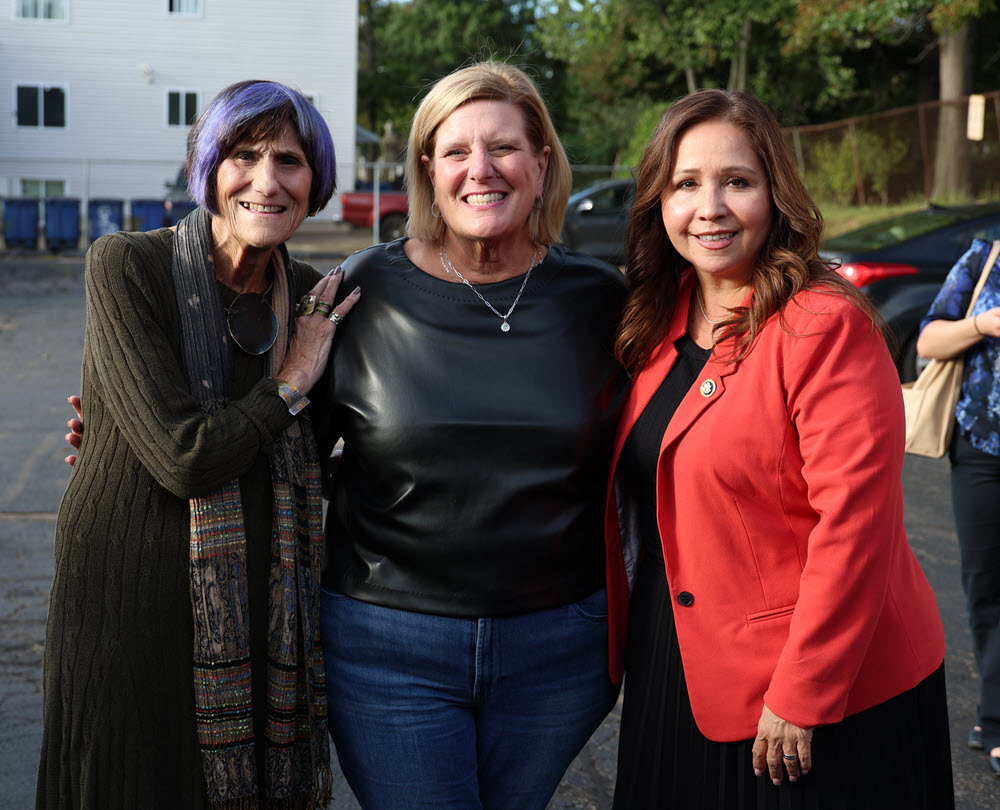
Connecticut Congresswoman Rosa DeLauro, CEA President Kate Dias, and Arizona Congresswoman Adelita Grijalva.
“Unfortunately, in the communities I represent, ICE and border patrol will follow people to their homes just to harass them, just to make people feel uncomfortable,” Grijalva said. She explained that people are then often afraid to go shopping, go to work, and take their kids to school.
“As a member of the Education and Workforce Committee, I will continue working with Congresswoman DeLauro to hold these federal officials accountable and continue to fight back. We need to protect public education. There are no if, ands, or buts about it, and we have to make sure that every student and family has the same opportunity to reach their American dream, just like my family was able to.”
“Our immigrant students are the best investment we could make in public education,” Dias said. “I have never taught a student from another country who wasn’t willing to work really hard and hustle. I have so many stories from my immigrant students. I used to have them in my high school math class, some had not even started learning English, and by the end of four years those brilliant young minds were doing amazing work. When we think about return on investment, educating our immigrant students is some of the best money we’ll ever spend.”
Voucher scheme expansion
Grijalva described Arizona as a place where bad ideas in education seem to be tested out before expanding nationally. The Federal Scholarship Tax Credit, a federal voucher scheme from the Trump administration currently being implemented in many states around the country, bears similarities to Arizona’s voucher program.
“Arizona is the capital of vouchers,” Grijalva said. “We lost one billion dollars from our public education system in the very first year of implementation of the ESA vouchers, and it’s going to be more. And what they’re paying for with our tax dollars are things like lingerie, Legos, and trips to Disneyland.”
Arizona expanded its Empowerment Scholarship Accounts voucher program in 2022, and an audit found that the Arizona Department of Education had auto approved all expenses under $2,000, which have included many non-education expenses such as a generator, gym equipment, and amusement park visits.
“There are no checks and balances, and what I heard in our House Education & Workforce Committee is that some politicians want to do that same kind of thing across the country,” Grijalva said. “And what starves is our public education system.”
“Let’s learn from Arizona about what we should be on guard against here in Connecticut,” said New Haven Federation of Teachers President Leslie Blatteau. “Vouchers haven’t worked in Arizona, so why on Earth would we want to go there in Connecticut, or anywhere else? It’s the Trojan horse to dismantle our public schools long term.”
Learn more about the problem with vouchers and the Federal Scholarship Tax Credit.