
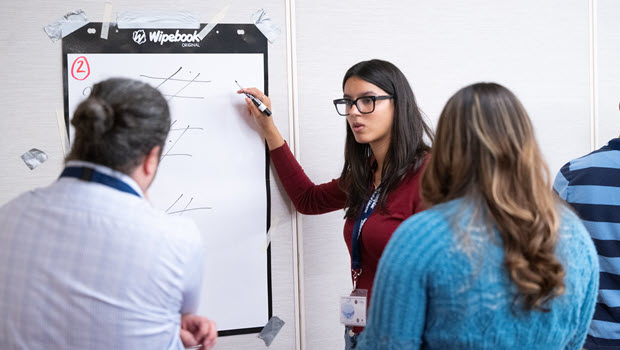
Summer is a time for educators to recharge, and that’s exactly what they did at the Connecticut Teacher of the Year Council’s Empowered to Lead symposium. Held July 7 at Mohegan Sun, the conference offered educators a day of connections and professional learning under the theme “The Power of Partnerships.”
“I cannot emphasize enough how inspiring it is to be surrounded by good people who strive to make the world a better place,” said CTTOY Council President David Bosso, welcoming his colleagues to the annual event.
Mohegan Tribe Council of Elders Chair Beth Regan, who taught at Tolland High School for more than 35 years, spoke of the power of personal connections, especially with students.
“Teaching is the hardest job you’ll ever love,” she said.
Also delivering welcoming remarks was Dalio Education founder Barbara Dalio, who reflected on the massive disruptions COVID created for public education five years ago and the struggles that have arisen since.
“Here you are again navigating uncertainties that make the work you do even more challenging than usual. Teachers are nimble and creative, so you always manage to find a way through, and I feel energized and excited by what you’ve accomplished over the last few years. Your dedication to your students inspires me every day.”
Collaborating with educators, Dalio acknowledged, has resulted in some of her organization’s most impactful work.
“Every young person has potential; I truly believe that, and I know you all do as well,” she said. “Without teachers, that potential would never be realized, so I am happy to be here to celebrate you and elevate you.”
Lifelong learning
Like all who excel at their work, educators are lifelong learners.
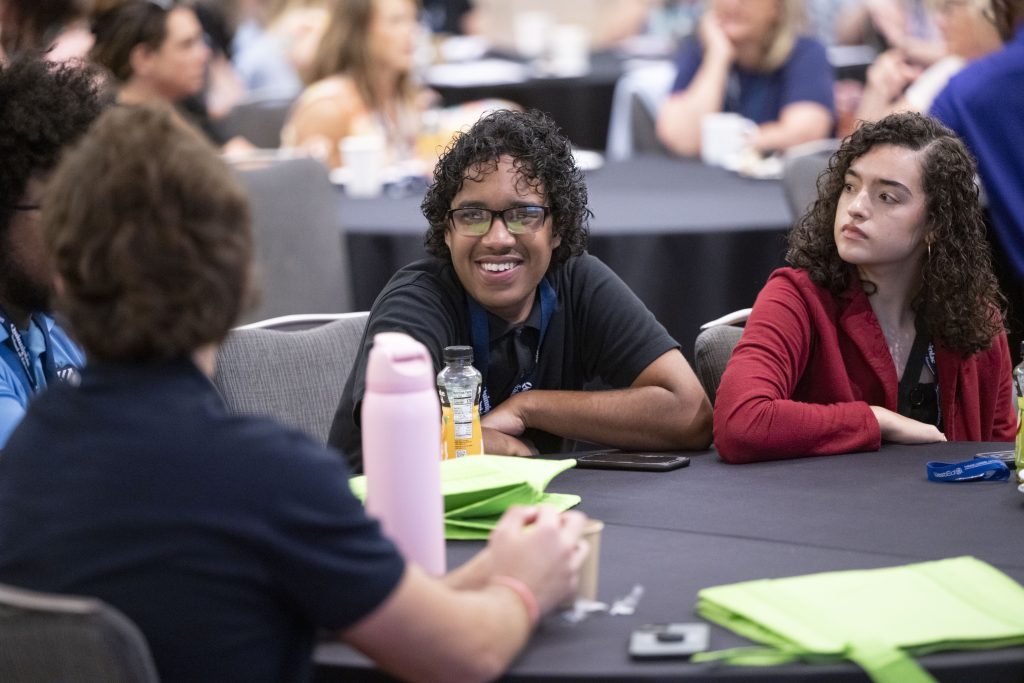 Every year, Empowered to Lead explores proven practices and new ideas for educators to take back to their schools and classrooms. This year’s lineup of breakout sessions ranged from art as a learning tool to student-led restorative programming, storyboarding, targeted instruction to close the achievement gap, multi-grade mentorship, justice-centered science teaching, nature study and outdoor education to foster deeper learning, partnering with families to defuse parent-teacher conflicts, and personalizing plans for multilingual learners using artificial intelligence.
2025 Southington Teacher of the Year Patricia Pettit, department leader for her district’s multilingual learning services, collected information and strategies she’ll put to work right away.
“We have about 250 multilingual learners districtwide, and one of the big tasks ahead of us this summer is creating individualized multilingual learning plans—a huge endeavor,” she explained. “For about six months, I’ve been working on a model plan, and today’s workshop was helpful in showing how to do that efficiently and effectively with help from AI and our curriculum technology specialist so that our teachers can have something in their hands—something that will help them understand various students’ language abilities, growth trajectories, and where they need support and scaffolding for conversational or academic language.”
Also getting a head start on the new school year was 2025 Connecticut Teacher of the Year semifinalist Gretchen Hess, who teaches English at Putnam High School.
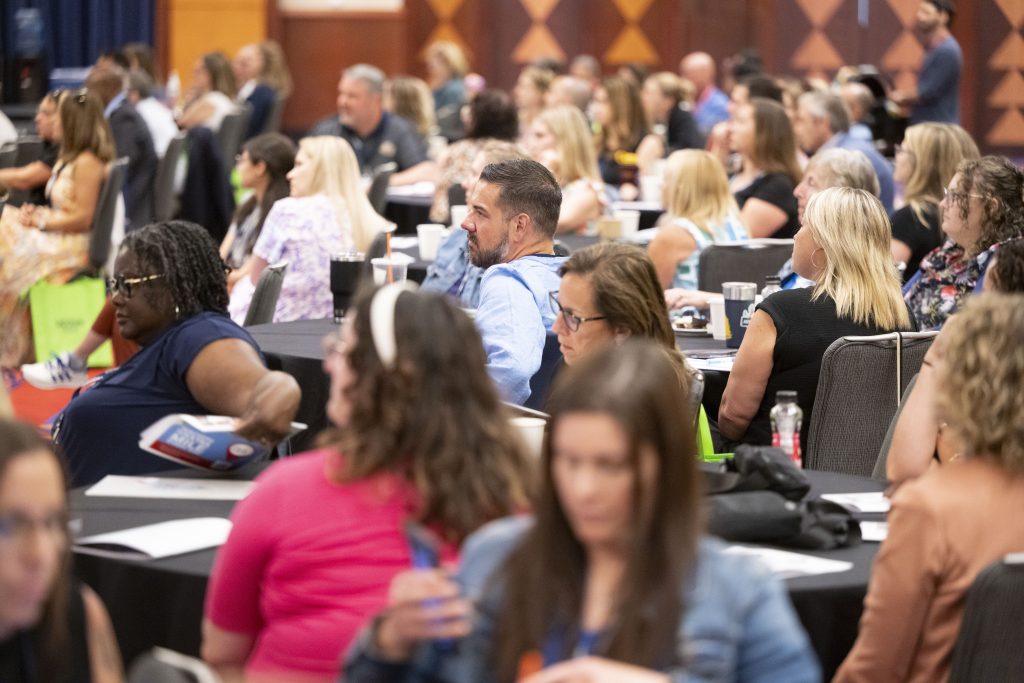 “My district is implementing restorative practices this fall, and I was able to engage in a session on student-based activities that will get my students really comfortable in that community,” she said. “It’s a wonderful jumping-off point for the work we’ll be doing in the fall and a really spectacular opportunity to come together with likeminded educators exploring so many excellent topics.”
Fellow Putnam educator Shane Donahue, a Connecticut math teacher leader with experience advancing equitable mathematics education, agreed.
“One of the most important things in my classroom, or in any math classroom, is building a growth mindset,” he said. “It’s like going to the gym. Maybe I can’t pick up something heavy today, but if I go regularly, after a year I can pick up something heavy. Failure is just part of the process. For me this symposium was a lot about how to improve our practice in the classroom as well as build partnerships beyond our schools. Over the last few years I’ve run Relay for Life—a fundraiser for the American Cancer Society—and met a lot of community members, and now it’s like, how do I leverage those relationships to build school partnerships?”
Common experience
Stafford special education teacher Christopher Ekstrom, whose caseloads often reach or exceed 27 students, appreciated a chance to connect with others in his field—professionals who know firsthand the challenges he faces.
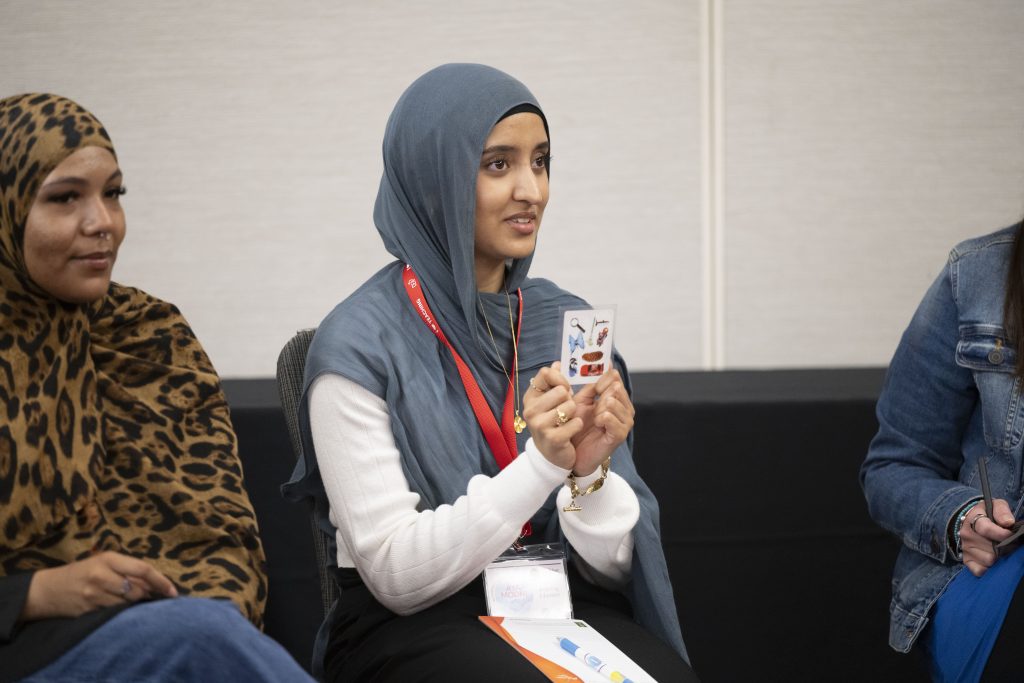 His wife, Tammy—a fifth-grade social studies teacher in Columbia—also met colleagues doing similar work in settings as varied as Plainfield High School, where the district’s 2020 Teacher of the Year, Kevin Mariano, teaches UConn-level American studies, and New Haven’s Metropolitan Business Academy, home to civics and restorative justice classes led by 2025 Connecticut Teacher of the Year Julia Miller.
“I love any chance I get to be in a room full of educators,” Miller told the crowd. “There is so much energy, so much heart, so much power. These are trying times we are going through, and yet I take great solace in knowing that in classrooms across this country there are profound connections being made through the power of teaching and learning, relationship-building, and partnerships. Education is foundational to our democracy, and in a democracy it is essential that people are informed and make their voices heard. As a teacher, and as a civics teacher especially, I care deeply about making sure students know how to use their voices to make the change they want, whether it’s at hyperlocally at the school level or all the way up on the national stage. Change, however, is not a solo endeavor. To make change, we need to partner with others. We need to act in solidarity.”