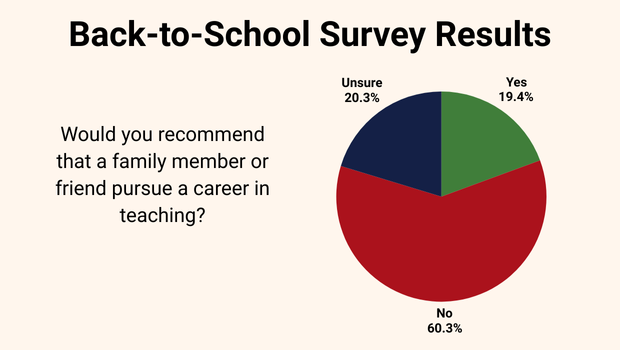
Teachers and students are back in the classroom beginning a new school year, and a new CEA back-to-school survey reveals persistent and worsening challenges plaguing educators, students, and public education that can’t be ignored.
The survey results paint a clear picture of widespread dissatisfaction among educators related to teacher shortages, low and uncompetitive pay, overwhelming stress and burnout, and a lack of respect for the work they do. At the same time, student mental health needs and behavioral challenges are growing, leaving educators with fewer resources to meet them.
To shine a spotlight on these urgent issues, Channel 3 will be airing interviews with CEA members every day this week, diving deeper into the survey findings. Teachers will share their firsthand experiences with stress and burnout, concerns about students’ mental health, the financial pressures of low pay and rising expenses, and the impact of cell phones and screens on learning. NBC Connecticut will be covering the survey during their newscast tonight, and WTNH will be featuring CEA Vice President Joslyn DeLancey talking about the survey results tomorrow at 9 a.m.
“The problems in our schools are growing more severe, and teachers’ calls for action are being ignored, leaving students to pay the price,” said CEA President Kate Dias. “Our educators are underpaid, disrespected, and stretched beyond their limits—and many are being driven out of the profession in search of careers that value their work, pay them fairly, and treat them with dignity—leaving many classrooms without certified educators to teach our children.”
More than two-thirds of educators (69%) expressed dissatisfaction with conditions in their schools, and 64% say things have gotten worse over the past two years. Special education teachers and those in urban districts are particularly affected, with 72% and 89% respectively expressing dissatisfaction and 66% of special education teachers and 76% of urban educators saying things have gotten worse.
Key findings from the survey of nearly 1,000 educators highlight the depth and urgency of the crisis.
Top concerns:
- Stress and burnout (98%)
- Problems with student behavior (90%)
- Student mental health issues (89%)
- Too little time for prep, collaboration, and planning (89%)
- Towns continue cutting school budgets (87%)
- Shortage of teachers and staff (86%)
- Lack of respect: educators not treated as professionals (87%)
- Low educator salaries (85%). That number jumps up to 90% in urban districts.
Ready a summary of the survey or check out the full results.