“We’re working on some really good issues with CEA, AFT Connecticut, and legislative leaders to improve the quality of life for teachers across Connecticut,” says State Rep. Ron Napoli. “This is a year where we can go back to our members and say, ‘We advocated for more dollars for ECS, we got just cause to protect teachers.'”
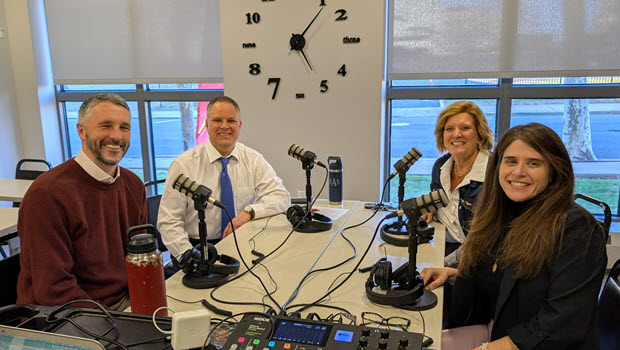
Napoli is joined by fellow educator and CEA member State Rep. Patrick Biggins on the latest episode of CEA’s podcast, Two T’s in a Pod. The legislators talk with CEA President Kate Dias and Vice President Joslyn DeLancey about some of the issues lawmakers are considering this session from Freedom of Information Act Protections for teachers to increased education (ECS) funding and a bell-to-bell cell phone ban.
Napoli, a Waterbury social studies teacher, and Biggins, a Goodwin University Magnet School counselor, also talked about how educators can best communicate with legislators on the issues. A prime opportunity for conversation is coming up after school on April 8—CEA’s Lobby Day.
“Any time you can personalize an issue, it’s more likely to resonate with lawmakers,” Napoli says. “It’s important to a legislator that somebody in their district or from the same field that they work in can share a story that relates back to the underlying issue.”
“Hearing from our own constituents, from the people in our own neighborhood matters,” Biggins adds.
The legislators say that in-person communication is best, but if you can’t make lobby day, a public hearing, or a back-home meeting, personalized correspondence is most likely to sway lawmakers. They agreed that, with the limited time that results from balancing teaching with legislative responsibilities, they’re unlikely to read emails or pieces of written testimony that are clearly form letters.
“If you’re going to write me a handwritten card, I’m going to read it, because I don’t get a lot of those,” Biggins says.
“I was a building rep before I became a legislator, and I remember when our former union president would put an email address up on the board and say, ‘Make sure you email your legislators.’ You could feel the thoughts in the room: ‘Someone else will do that.’ It is really important that teachers do the hard work and contact legislators.”
Dias reminds teachers that you don’t have to be an expert on an issue or prepare in advance to come to CEA Lobby Day.
“You don’t have to do anything special,” she says. “The authentic, ‘Hey, I’m your constituent, and I want to talk about an issue,’ is a really good place for our members to start.”
Register for CEA Lobby Day, and listen to the full podcast episode below or wherever you get your podcasts.