

PD & Instruction

WORKSHOP CATEGORIES

AI in the Classroom: Friend or Foe?

This interactive workshop is designed to provide educators with an opportunity to explore their experiences and concerns regarding the role of AI in their classrooms. The session will cover ethical considerations, such as data privacy, intellectual property protection, and bias, as well as identify policy needs to balance concerns with effective, responsible use. The workshop will conclude with an exploration of practical strategies teachers can use to maximize their time, including AI tools for lesson planning, differentiated learning, and administrative tasks.
Art of Giving and Receiving Feedback

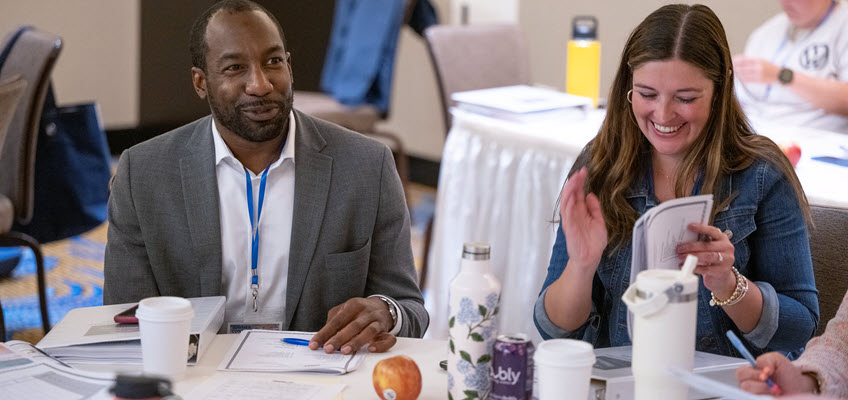
This workshop is designed for evaluators, peer coaches, department chairs, TEAM mentors, and anyone who wants to improve on giving and receiving feedback in any context. Constructive feedback encourages reflection and creates reciprocal pathways to ongoing growth and development. This workshop provides educators with specific, practical strategies to build trust and foster collegiality, as well as encourage self-reflection, helping enrich educator practice and enhance student growth and well-being. This session will be highly interactive, and participants will practice giving and receiving feedback with several different partners.

Difficult Conversations Made Easy

In this interactive session, participants will learn to recognize when it is time to have a difficult conversation and will learn simple strategies to take the fear out of initiating one. The workshop will cover how to manage strong feelings that arise during difficult conversations, as well as how and when to follow up afterward. The workshop includes several opportunities for participants to practice initiating difficult conversations with tact and openheartedness. This workshop is designed to help members address problems proactively, settle differences amicably, promote trust, and contribute to a healthy school climate.

Dispute Resolution Strategies for Teacher Evaluation

This highly interactive workshop is designed to provide teachers with practical strategies and structures to defuse and resolve disputes in an impartial, healthy, transparent way. Useful for department chairs, PDEC representatives, dispute resolution committee members, and classroom teachers, these strategies can be applied to a variety of situations and contexts. Disputes resolved openly and fairly help foster trust and collegiality and promote a positive school culture. This workshop will involve roleplay, and participants will practice resolving common disputes.

Managing Conflict in Healthy Ways

Teaching is stressful enough, but when conflicts arise at work, that stress can become toxic. Learn to identify the underlying causes of conflict, distinguish between types of conflict, and practice selecting and employing appropriate strategies to manage conflicts effectively. Through roleplay and sample scenarios, participants will practice using conflict resolution strategies to manage difficult situations with confidence and grace.

PDEC Tune-up

This workshop can be customized to meet the unique needs of your district’s professional development and evaluation committee (PDEC). It provides a refresher on PDEC roles, responsibilities, and operating procedures and offers an opportunity to build greater trust and a partnership between administration and teachers. It includes an overview of state statutes on leader and educator evaluation guidelines and professional development requirements, a mutual agreement protocol, sample norms, templates, and sample surveys useful in planning professional development and guiding possible revisions to the district’s evaluation plan. The workshop includes an overview of innovative practices around the state.

True Colors: Harnessing the Power of Personality to Build Effective Teams and Enhance Teaching and Learning

MEMBER AUTHENTICATION REQUIRED

Please enter your CEA Membership ID below.


Your membership ID is on your membership card that you received at the start of the school year. It can also be found on the label of your CEA Advisor.

If you do not have your ID, you can access it by logging into NEA Ed Communities. First-time visitors must create a personal profile.


If you are still experiencing problems logging in, contact our web team.

Art of Giving and Receiving Feedback

This workshop is designed for evaluators, peer coaches, department chairs, TEAM mentors, and anyone who wants to improve on giving and receiving feedback in any context. Constructive feedback encourages reflection and creates reciprocal pathways to ongoing growth and development. This workshop provides educators with specific, practical strategies to build trust and foster collegiality, as well as encourage self-reflection, helping enrich educator practice and enhance student growth and well-being. This session will be highly interactive, and participants will practice giving and receiving feedback with several different partners.

Beyond Bloom: HOT Questioning Techniques That Promote Total Class Participation

This interactive workshop is appropriate for teachers of all subjects and grade levels and is designed to foster higher order thinking and total participation from all students. It offers practical tools and strategies to encourage students of all abilities and temperaments to think deeply about a topic and feel confident making contributions that enrich class discussions. Tools include Bloom’s Taxonomy, Depth of Knowledge charts, Socratic questioning, and dialogic methods, all of which are designed to promote imagination, wonder, creativity, and collaborative problem-solving. Participants will roleplay to practice strategies with their peers and will leave the workshop with practical tools they can begin to use immediately to elevate class discussions.

Classroom Management Strategies

There are so many things educators need to know and be able to do, but perhaps the most important is how to manage a classroom. This interactive workshop explores the importance of building strong relationships with students as the foundation of classroom management. Participants will be provided practical strategies to implement consistent routines and smooth transitions as well as tips and tools to minimize off-task behaviors. Customizable for all grade levels.

Developing Meaningful SEL Goals for Teacher Evaluation and Student Growth

Concerns about student mental health and emotional well-being have deepened in recent years, making social-emotional learning a top priority for educators across the country. Many districts are encouraging educators to adopt SEL goals rather than purely academic ones. Learn how to set SEL goals that are meaningful to students and teachers and embedded within the curriculum. SEL is inherently difficult to measure, and this workshop will provide practical, holistic strategies to help make SEL progress visible to students, educators, and parents/guardians.

Difficult Conversations Made Easy

In this interactive session, participants will learn to recognize when it is time to have a difficult conversation and will learn simple strategies to take the fear out of initiating one. The workshop will cover how to manage strong feelings that arise during difficult conversations, as well as how and when to follow up afterward. The workshop includes several opportunities for participants to practice initiating difficult conversations with tact and openheartedness. This workshop is designed to help members address problems proactively, settle differences amicably, promote trust, and contribute to a healthy school climate.

Dispute Resolution Strategies for Teacher Evaluation

This highly interactive workshop is designed to provide teachers with practical strategies and structures to defuse and resolve disputes in an impartial, healthy, transparent way. Useful for department chairs, PDEC representatives, dispute resolution committee members, and classroom teachers, these strategies can be applied to a variety of situations and contexts. Disputes resolved openly and fairly help foster trust and collegiality and promote a positive school culture. This workshop will involve roleplay, and participants will practice resolving common disputes.

Exploring the Connecticut Code of Professional Responsibility

All educators must demonstrate an understanding of professional responsibilities and ethical practice. This highly interactive, scenario-based workshop engages participants in exploring key competencies and themes. Through real-world situations and collaborative discussion, participants will reflect on their role as trusted professionals whose responsibilities extend beyond the classroom and into the broader community. Emphasizing the highest standards of professionalism, this session highlights how ethical practice serves as a foundation for effective teaching and long-term success.

Making the Most of Home–Teacher Communication

Home–teacher communication can be difficult. This session provides tips to help you develop and promote a working partnership with families prior to parent–teacher conferences, review different types of conferences, assist you with strategies to use during the conference itself, and provide ideas for sustained family contact and engagement throughout the year. You will also learn valuable approaches to handling conferences where student misbehavior or challenging parents are a factor, with lots of time built in for discussion and perhaps even some role-playing.

PDEC Tune-up

This workshop can be customized to meet the unique needs of your district’s professional development and evaluation committee (PDEC). It provides a refresher on PDEC roles, responsibilities, and operating procedures and offers an opportunity to build greater trust and a partnership between administration and teachers. It includes an overview of state statutes on leader and educator evaluation guidelines and professional development requirements, a mutual agreement protocol, sample norms, templates, and sample surveys useful in planning professional development and guiding possible revisions to the district’s evaluation plan. The workshop includes an overview of innovative practices around the state.

Active Listening Skills: Strategies for All Grade Levels

As a society, we tend to talk more than we listen. Listening, despite being an essential life skill, is often not explicitly taught. While communication skills are often taught in school, the focus tends to be on classroom participation or effective public speaking. Strong listening skills are needed now more than ever and can be systematically taught and measured. Listening to others not only helps students master content, it also promotes understanding of different perspectives, fosters civility and respect, helps students make friends, reduces conflicts, and improves collaboration. This workshop provides tips and strategies to foster effective listening skills at all grade levels.

AI in the Classroom: Friend or Foe?

This interactive workshop is designed to provide educators with an opportunity to explore their experiences and concerns regarding the role of AI in their classrooms. The session will cover ethical considerations, such as data privacy, intellectual property protection, and bias, as well as identify policy needs to balance concerns with effective, responsible use. The workshop will conclude with an exploration of practical strategies teachers can use to maximize their time, including AI tools for lesson planning, differentiated learning, and administrative tasks.

Art of Giving and Receiving Feedback

This workshop is designed for evaluators, peer coaches, department chairs, TEAM mentors, and anyone who wants to improve on giving and receiving feedback in any context. Constructive feedback encourages reflection and creates reciprocal pathways to ongoing growth and development. This workshop provides educators with specific, practical strategies to build trust and foster collegiality, as well as encourage self-reflection, helping enrich educator practice and enhance student growth and well-being. This session will be highly interactive, and participants will practice giving and receiving feedback with several different partners.

Artificial Intelligence Series (AIED)

This series of modules explore key topics in artificial intelligence and education, designed by educators specifically for educators. Each module offers practical insights, research-informed perspectives, and classroom-relevant applications to help participants thoughtfully integrate AI into teaching and learning.

Module Topics:

  • Foundations and Applications of AI
  • Human-Centered Approaches to AI
  • Evidence-Based AI for Learning
  • Safe and Ethical Use of AI
  • Promoting AI Equity and Access
  • Enhancing Educator Practice with AI
  • Student Centered AI Literacy

Beyond Bloom: HOT Questioning Techniques That Promote Total Class Participation

This interactive workshop is appropriate for teachers of all subjects and grade levels and is designed to foster higher order thinking and total participation from all students. It offers practical tools and strategies to encourage students of all abilities and temperaments to think deeply about a topic and feel confident making contributions that enrich class discussions. Tools include Bloom’s Taxonomy, Depth of Knowledge charts, Socratic questioning, and dialogic methods, all of which are designed to promote imagination, wonder, creativity, and collaborative problem-solving. Participants will roleplay to practice strategies with their peers and will leave the workshop with practical tools they can begin to use immediately to elevate class discussions.

Classroom Management Strategies

There are so many things educators need to know and be able to do, but perhaps the most important is how to manage a classroom. This interactive workshop explores the importance of building strong relationships with students as the foundation of classroom management. Participants will be provided practical strategies to implement consistent routines and smooth transitions as well as tips and tools to minimize off-task behaviors. Customizable for all grade levels.

Culturally Responsive Instructional Strategies

MEMBER AUTHENTICATION REQUIRED

Please enter your CEA Membership ID below.


Your membership ID is on your membership card that you received at the start of the school year. It can also be found on the label of your CEA Advisor.

If you do not have your ID, you can access it by logging into NEA Ed Communities. First-time visitors must create a personal profile.


If you are still experiencing problems logging in, contact our web team.

Developing Executive Functions in Students of All Ages

MEMBER AUTHENTICATION REQUIRED

Please enter your CEA Membership ID below.


Your membership ID is on your membership card that you received at the start of the school year. It can also be found on the label of your CEA Advisor.

If you do not have your ID, you can access it by logging into NEA Ed Communities. First-time visitors must create a personal profile.


If you are still experiencing problems logging in, contact our web team.

Diversity, Equity, and Cultural Competence (DECC) Series

This series of on-demand modules explores key topics related to diversity, equity, and cultural competence in education. Each offers opportunities for reflection, learning, and practical application to help participants better understand inequities, strengthen inclusive practices, and support safe, just, and welcoming school communities.

Module Topics:

  • Exploring and Unpacking Bias
  • Exploring Historical Inequities in Public Education
  • Awareness of Current Institutional Inequities
  • Diversity, Equity and Cultural Competence in Classroom Instruction
  • Becoming an Advocate for Safe and Just Schools

Educating with Pride

In recent years, LGBTQ+ issues have become a cultural lightning rod in education. The goal of this workshop is to educate LGBTQ+ educators and their allies on their rights in and out of the classroom and discuss how best to support themselves, their colleagues, and students. We will be discussing the current state of LGBTQ+ issues in education, real-world cases and examples, and what rights you have when navigating complex issues. We will show you how to start becoming the best ally you can be!

Escape Room Challenge: Playful Learning in the Upper Grades

(Limited to 25 participants)

Discover how to harness the power of play in learning by creating an educational escape room for your students. This interactive workshop invites teachers to experience an escape room firsthand, demonstrating how gamebased learning can make lessons more engaging and memorable at all grade levels. The session emphasizes the importance of play in fostering deep learning across all age groups. Participants will have time to collaborate and begin brainstorming their own escape room challenge, tailored to their subject area and grade level. By the end of the workshop, you’ll leave with practical ideas and strategies for implementing escape rooms in your classroom, engaging students in learning through excitement, problem-solving, and teamwork.

Every Voice at the Table: Strategies to Foster Total Participation

Whether in classrooms, faculty meetings, or professional learning sessions, meaningful engagement happens when every voice has the opportunity to contribute. This workshop introduces innovative facilitation strategies that move beyond traditional discussion formats to ensure high levels of participation and interaction. Participants will explore practical approaches such as World Café, Open Space, structured dialogue protocols, and other collaborative discussion formats that invite reflection, cultural awareness, shared thinking, and collective problem solving. Educators will leave with adaptable strategies that foster inclusive dialogue, deepen engagement, and ensure all participants have a meaningful opportunity to contribute.

Gender Achievement Gap: Why Boys Are Falling Behind and What Can Be Done About It

Boys are falling behind girls academically at every level, from kindergarten through graduate school. Girls dramatically outperform boys on every standardized measure of reading and writing achievement and have reached rough parity with males in math and science, except at the very top of the performance curve. Boys are also more likely to get into trouble at school, experiment with drugs, and drop out of school. Nearly 60 percent of students graduating from college are now female, and for the first time in history we see more women than men getting advanced degrees. Left unaddressed, the gender achievement gap in education could have significant destabilizing economic and social impacts. Learn why males may be falling behind and what schools can do to support them academically and emotionally and begin to close the growing gender achievement gap.

Introduction to Student Trauma: Developing a Trauma Sensitive Classroom

Nearly 7 out of 10 children experience trauma, and many experience multiple traumatic experiences. The impact of trauma on children and adolescents is pervasive and presents challenges in every school and community in the state. We are collectively learning more about the challenges trauma presents to classroom teachers and how to help those who experience trauma overcome its effects. Participants will learn how to identify the signs of trauma and better understand its impact on students and the school community. Participants will also learn practical skills and strategies that can help address student trauma in their classrooms.

Making the Most of Home–Teacher Communication

Home–teacher communication can be difficult. This session provides tips to help you develop and promote a working partnership with families prior to parent–teacher conferences, review different types of conferences, assist you with strategies to use during the conference itself, and provide ideas for sustained family contact and engagement throughout the year. You will also learn valuable approaches to handling conferences where student misbehavior or challenging parents are a factor, with lots of time built in for discussion and perhaps even some role-playing.

Mind the Moment: Practical Mindfulness Activities for Students and Teachers

Mindfulness is receiving much-needed attention right now, in part due to the pressures of living in an increasingly complex world. Smartphones, busy schedules, and a 24-hour news cycle can be distracting for even the most focused individual. Facebook, Instagram, and Twitter connect us with strangers around the world but also threaten to isolate us from those closest to us. You may find yourself spending more time worrying about the future or dwelling on something that happened in the past rather than fully experiencing the present moment. This is also true of our students, many of whom struggle to concentrate in class and have difficulty learning as a result. Learn how to integrate mindfulness activities into your existing classroom routines without losing instructional time or sacrificing the curriculum. Mindfulness activities can enhance the quality of life for young and old, improve mental focus and classroom behavior, and enhance learning outcomes.

Mini Workshops

(limited to 20 participants)

CEA offers a series of brief, 30-minute informal workshops that provide practical strategies teachers can use to manage stress or enhance their teaching practice. These quick workshops are designed to provide a few moments of fun and a short respite for teachers after a long day. Each mini workshop includes a gift bag for each participant at no cost. Mini workshops can be arranged for teachers during a PD day, in lieu of a department meeting, during an association meeting, or as a special event.

Mini workshop options:

  • Coffee Break. Have a cup of coffee and a sweet treat and discuss simple strategies to engage learners, build a positive classroom community, and promote total class participation.
  • Stress Reduction and Personal Wellness. Practice several simple exercises to help you reclaim power over your nervous system’s response to stress. Includes a wellness gift bag with practical stress-reducing tools and activities.
  • Let’s Play! Learn different games to play in the classroom that will engage students and make learning fun and durable.

Multilingual Learners Series

This on-demand series focuses on building knowledge and practical strategies to better support multilingual learners in today’s classrooms. Participants will explore key concepts related to language development, culturally responsive instruction, assessment, and meaningful partnerships with families, while strengthening their ability to advocate for and support multilingual students’ academic success.

Module Topics:

  • Multilingual Learners 101
  • Assessing Multilingual Learners
  • Culturally Relevant Pedagogy
  • Advocating for Multilingual Learners
  • Multilingual Learners and Standards Based Instruction
  • Family and Caregiver Engagement and Partnerships
  • Second Language Acquisition and Instruction Strategies

Mythbusters: Understanding Your Legal Rights and Responsibilities in the Special Education Process

This workshop focuses on the laws regarding special education, with a particular emphasis on regular and special education teachers’ rights and responsibilities when participating in the special education process. Participants will learn what the law requires of them as well as what they can and cannot do in such areas as PPT meetings, drafting IEPs, and accommodating students in the regular education environment. The impact of special education laws on teachers’ working conditions will be integrated throughout the workshop.

Neurodivergence is a Superpower: Unlocking Innovation Through Asset Based Education

This workshop reframes neurodivergence as a source of strength, creativity, and high potential in today’s classrooms. Educators will explore how differences in thinking—such as ADHD, autism, dyslexia, and other neurotypes—can fuel problem solving, innovation, and unique perspectives when nurtured through asset based practices. Participants will learn practical strategies for identifying student strengths, designing flexible learning environments, leveraging interests and talents, and cultivating a culture where diverse minds thrive. By shifting from a deficit lens to a strengths oriented approach, teachers will walk away prepared to empower every learner and activate the untapped potential within their classrooms.

Play-Based Learning: Integrating Purposeful Play into the Early Grades

Young children learn about themselves, others, and the world around them primarily through play. Play is essential for healthy physical, cognitive, and social emotional development. Despite its critical importance, opportunities for children to learn through play have dwindled due to testing demands and the misconception that play takes time away from “real learning.” Fortunately, the Connecticut legislature recognized the essential role play has in children’s learning and social emotional development and passed Public Act 23-101, requiring the integration of play-based learning in the early grades. This interactive workshop provides an overview of the many benefits of learning through play, discusses ways to integrate more playful learning into the school day, provides practical strategies and activities, and invites participants to engage in purposeful play together. Elementary school

Playful Pathways to the Science of Reading: Play-Based Strategies for Educators and Administrators

Unlock the transformative power of play in early literacy education! This dynamic presentation is designed for educators and administrators who wish to explore the intersection of play and the science of reading. Participants will delve into research-based strategies that highlight the critical role of play in developing foundational reading skills. Educators will learn how to create engaging, play-centered learning environments that foster literacy development.
Topics will include:

  • The principles of the science of reading and its implications for early childhood education.
  • Practical play-based strategies that enhance phonemic awareness, vocabulary, and comprehension.
  • Techniques for integrating play into structured literacy instruction.
  • Assessment methods that value play as a legitimate form of learning.

By the end of this presentation, participants will leave with a toolkit of playful strategies to implement in their classrooms and schools, ensuring that all children have the opportunity to thrive as readers. Join us in this exciting journey to reimagine literacy education through the lens of play!

Promoting Student Autonomy in the Classroom

This workshop is designed for teachers of all levels and focuses on encouraging students to gradually take ownership of their learning goals and a more active role in achieving them. Practical classroom tools include total class participation strategies, student-generated performance rubrics, student-led parent conferences, and more.

Reworking Homework: Maximize Student Achievement and Minimize Stress on Students and Families

Homework is a hot topic. When relevant, carefully designed, and given in moderation, homework has been shown to increase student achievement (at the high school level). It can also, however, contribute to high levels of stress, anxiety, and family discord. This workshop provides an overview of the extensive research into the subject of homework and offers practical tips for minimizing the harmful impact while maximizing the positive outcomes. Designed for middle and high school teachers, this workshop can be customized for any grade level.

Student Engagement and Participation Strategies

This interactive workshop focuses on improving student engagement and participation in a highly distracted era. Different types of engagement will be explored, opportunities to share and learn from each other will be provided, and a list of easily implementable engagement and total participation strategies will be shared with participants. Time will also be provided throughout the workshop to practice selected strategies in small groups.

Supporting LGBTQ+ Students

This series of on-demand modules focuses on practical ways educators can help create safer, more inclusive school environments for LGBTQ+ students. Participants will explore strategies for addressing bias, fostering respectful classrooms, and communicating effectively about LGBTQ+ topics within school communities.
Module Topics:

  • Taking a Stand: Creating Safer Schools for LGBTQ+ Students
  • Walking the Talk: Classroom Strategies for Addressing LGBTQ+ Bias
  • Making the Case: Communication Strategies for LGBTQ+ Issues

The Power of Story: Using Narrative to Deepen Learning and Connection

This workshop introduces educators to storytelling as a dynamic instructional tool that enhances comprehension, engagement, and memory. Participants will explore how narratives can make content more relatable, support social-emotional learning, and help students make meaningful connections across disciplines. Through practical techniques and adaptable story-based activities, teachers will learn how to use narrative structures to spark curiosity, humanize complex ideas, and empower students to become storytellers of their own learning.

Trauma and Healing Centered Practices Series

This series of on-demand modules explores how trauma can affect students’ learning, behavior, and sense of belonging in school. Participants will deepen their understanding of different forms of trauma and learn practical, healing-centered approaches that support student well-being while also recognizing the impact of secondary trauma on educators.

Module Topics:

  • Creating a Healing-Centered Learning Environment
  • Trauma-Informed Support for Students
  • Secondary Trauma
  • Creating Healing-Centered Learning Environments for Students who are Refugees
  • Race-based Trauma
  • Poverty-related Trauma

True Colors: Harnessing the Power of Personality to Build Effective Teams and Enhance Teaching and Learning

MEMBER AUTHENTICATION REQUIRED

Please enter your CEA Membership ID below.


Your membership ID is on your membership card that you received at the start of the school year. It can also be found on the label of your CEA Advisor.

If you do not have your ID, you can access it by logging into NEA Ed Communities. First-time visitors must create a personal profile.


If you are still experiencing problems logging in, contact our web team.

Yes, and…Teaching: Using Spontaneous Play to Boost Risk Taking and Engagement

This workshop explores how spontaneous, collaborative play strategies can transform classroom dynamics and spark deeper student engagement. Educators will learn simple, low prep activities that encourage flexibility, creative thinking, active listening, and joyful participation. By creating a classroom culture where ideas are accepted, built upon, and explored, teachers can help students feel safe taking risks, expressing themselves, and embracing learning with curiosity and confidence.

Educating with Pride

In recent years, LGBTQ+ issues have become a cultural lightning rod in education. The goal of this workshop is to educate LGBTQ+ educators and their allies on their rights in and out of the classroom and discuss how best to support themselves, their colleagues, and students. We will be discussing the current state of LGBTQ+ issues in education, real-world cases and examples, and what rights you have when navigating complex issues. We will show you how to start becoming the best ally you can be!

Knowledge is the Best Protection: Understanding Your Rights With Challenging Student Behavior

As the demands to address all of a student’s academic and emotional needs have increased, it is vitally important that all teachers are informed of their legal rights and duties related to challenging student behavior.
In this timely workshop, you will learn

  • What procedures you should follow in the event you are threatened or injured by a student
  • Why it’s important to report any injuries or threats of harm to your principal and what reporting options are available to you
  • How the new challenging behavior law may help address behavior issues
  • What your association can do to help you take whatever steps are appropriate to protect your rights as an employee, including measures to provide a safer workplace for everyone in the building
  • What safety provisions can be negotiated in your collective bargaining agreement related to challenging student behavior

Mythbusters: Understanding Your Legal Rights and Responsibilities in the Special Education Process

This workshop focuses on the laws regarding special education, with a particular emphasis on regular and special education teachers’ rights and responsibilities when participating in the special education process. Participants will learn what the law requires of them as well as what they can and cannot do in such areas as PPT meetings, drafting IEPs, and accommodating students in the regular education environment. The impact of special education laws on teachers’ working conditions will be integrated throughout the workshop.

Section 504: An Emerging Issue for Educators

Section 504 of the Rehabilitation Act of 1973 is receiving increased attention in schools as more teachers than ever are working with 504 students on a daily basis. This workshop will provide an overview of this civil rights law, including the 2008 changes, its procedural requirements (with an emphasis on the eligibility process) and relationship to the IDEA, and its applicability to such timely issues as AD(H)D, field trips, and allergies.

Culturally Responsive Instructional Strategies

MEMBER AUTHENTICATION REQUIRED

Please enter your CEA Membership ID below.


Your membership ID is on your membership card that you received at the start of the school year. It can also be found on the label of your CEA Advisor.

If you do not have your ID, you can access it by logging into NEA Ed Communities. First-time visitors must create a personal profile.


If you are still experiencing problems logging in, contact our web team.

Diversity, Equity, and Cultural Competence (DECC) Series

This series of on-demand modules explores key topics related to diversity, equity, and cultural competence in education. Each offers opportunities for reflection, learning, and practical application to help participants better understand inequities, strengthen inclusive practices, and support safe, just, and welcoming school communities.

Module Topics:

  • Exploring and Unpacking Bias
  • Exploring Historical Inequities in Public Education
  • Awareness of Current Institutional Inequities
  • Diversity, Equity and Cultural Competence in Classroom Instruction
  • Becoming an Advocate for Safe and Just Schools

Educating with Pride

In recent years, LGBTQ+ issues have become a cultural lightning rod in education. The goal of this workshop is to educate LGBTQ+ educators and their allies on their rights in and out of the classroom and discuss how best to support themselves, their colleagues, and students. We will be discussing the current state of LGBTQ+ issues in education, real-world cases and examples, and what rights you have when navigating complex issues. We will show you how to start becoming the best ally you can be!

Introduction to Student Trauma: Developing a Trauma Sensitive Classroom

Nearly 7 out of 10 children experience trauma, and many experience multiple traumatic experiences. The impact of trauma on children and adolescents is pervasive and presents challenges in every school and community in the state. We are collectively learning more about the challenges trauma presents to classroom teachers and how to help those who experience trauma overcome its effects. Participants will learn how to identify the signs of trauma and better understand its impact on students and the school community. Participants will also learn practical skills and strategies that can help address student trauma in their classrooms.

Multilingual Learners Series

This on-demand series focuses on building knowledge and practical strategies to better support multilingual learners in today’s classrooms. Participants will explore key concepts related to language development, culturally responsive instruction, assessment, and meaningful partnerships with families, while strengthening their ability to advocate for and support multilingual students’ academic success.

Module Topics:

  • Multilingual Learners 101
  • Assessing Multilingual Learners
  • Culturally Relevant Pedagogy
  • Advocating for Multilingual Learners
  • Multilingual Learners and Standards Based Instruction
  • Family and Caregiver Engagement and Partnerships
  • Second Language Acquisition and Instruction Strategies

Supporting LGBTQ+ Students

This series of on-demand modules focuses on practical ways educators can help create safer, more inclusive school environments for LGBTQ+ students. Participants will explore strategies for addressing bias, fostering respectful classrooms, and communicating effectively about LGBTQ+ topics within school communities.
Module Topics:

  • Taking a Stand: Creating Safer Schools for LGBTQ+ Students
  • Walking the Talk: Classroom Strategies for Addressing LGBTQ+ Bias
  • Making the Case: Communication Strategies for LGBTQ+ Issues

Dealing with Secondary Trauma: Self-Care Strategies for Teachers

Teachers care deeply about their students and take their “in loco parentis” responsibilities quite seriously. So when a student endures a traumatic event, the experience of trying to help the student cope may cause distress for the teacher as well. This phenomenon is called secondary trauma, and it can have serious physical and mental health repercussions if left unaddressed. Teaching is widely regarded as one of the most stressful occupations in the country, and it is also one of the most emotionally exhausting. This workshop provides an overview of the causes and symptoms of secondary trauma, selfcare strategies for teachers looking to restore their emotional balance, and resources for those seeking additional information or professional support.

Difficult Conversations Made Easy

In this interactive session, participants will learn to recognize when it is time to have a difficult conversation and will learn simple strategies to take the fear out of initiating one. The workshop will cover how to manage strong feelings that arise during difficult conversations, as well as how and when to follow up afterward. The workshop includes several opportunities for participants to practice initiating difficult conversations with tact and openheartedness. This workshop is designed to help members address problems proactively, settle differences amicably, promote trust, and contribute to a healthy school climate.

Introduction to Student Trauma: Developing a Trauma Sensitive Classroom

Nearly 7 out of 10 children experience trauma, and many experience multiple traumatic experiences. The impact of trauma on children and adolescents is pervasive and presents challenges in every school and community in the state. We are collectively learning more about the challenges trauma presents to classroom teachers and how to help those who experience trauma overcome its effects. Participants will learn how to identify the signs of trauma and better understand its impact on students and the school community. Participants will also learn practical skills and strategies that can help address student trauma in their classrooms.

Knowledge is the Best Protection: Understanding Your Rights With Challenging Student Behavior

As the demands to address all of a student’s academic and emotional needs have increased, it is vitally important that all teachers are informed of their legal rights and duties related to challenging student behavior.
In this timely workshop, you will learn

  • What procedures you should follow in the event you are threatened or injured by a student
  • Why it’s important to report any injuries or threats of harm to your principal and what reporting options are available to you
  • How the new challenging behavior law may help address behavior issues
  • What your association can do to help you take whatever steps are appropriate to protect your rights as an employee, including measures to provide a safer workplace for everyone in the building
  • What safety provisions can be negotiated in your collective bargaining agreement related to challenging student behavior

Let Go of Your Stress

MEMBER AUTHENTICATION REQUIRED

Please enter your CEA Membership ID below.


Your membership ID is on your membership card that you received at the start of the school year. It can also be found on the label of your CEA Advisor.

If you do not have your ID, you can access it by logging into NEA Ed Communities. First-time visitors must create a personal profile.


If you are still experiencing problems logging in, contact our web team.

Mental Health First Aid

Most of us would know how to help if we saw someone having a heart attack—call 9-1-1; start CPR. Too few of us, however, know how to respond to someone having a panic attack or what to do if a friend or colleague is showing signs of alcohol use disorder. Mental Health First Aid takes the fear and hesitation out of starting conversations about mental health and substance abuse. This training helps us identify potential problems, improves our understanding of what others may be going through, and provides a clear action plan for responding safely and responsibly. When more people are equipped to start a dialogue, more people can get the help they need. Mental Health First Aiders can even save lives.

  • Mental Health Crisis Response: Just the Basics (2 hours)
  • Mental Health First Aid Full Training for Adults (full day—6 hours—certificate provided)

Mind the Moment: Practical Mindfulness Activities for Students and Teachers

Mindfulness is receiving much-needed attention right now, in part due to the pressures of living in an increasingly complex world. Smartphones, busy schedules, and a 24-hour news cycle can be distracting for even the most focused individual. Facebook, Instagram, and Twitter connect us with strangers around the world but also threaten to isolate us from those closest to us. You may find yourself spending more time worrying about the future or dwelling on something that happened in the past rather than fully experiencing the present moment. This is also true of our students, many of whom struggle to concentrate in class and have difficulty learning as a result. Learn how to integrate mindfulness activities into your existing classroom routines without losing instructional time or sacrificing the curriculum. Mindfulness activities can enhance the quality of life for young and old, improve mental focus and classroom behavior, and enhance learning outcomes.

Mini Workshops

(limited to 20 participants)

CEA offers a series of brief, 30-minute informal workshops that provide practical strategies teachers can use to manage stress or enhance their teaching practice. These quick workshops are designed to provide a few moments of fun and a short respite for teachers after a long day. Each mini workshop includes a gift bag for each participant at no cost. Mini workshops can be arranged for teachers during a PD day, in lieu of a department meeting, during an association meeting, or as a special event.

Mini workshop options:

  • Coffee Break. Have a cup of coffee and a sweet treat and discuss simple strategies to engage learners, build a positive classroom community, and promote total class participation.
  • Stress Reduction and Personal Wellness. Practice several simple exercises to help you reclaim power over your nervous system’s response to stress. Includes a wellness gift bag with practical stress-reducing tools and activities.
  • Let’s Play! Learn different games to play in the classroom that will engage students and make learning fun and durable.

Setting Yourself Up For Financial Success

There are many things specific to educators that can make mastering your finances difficult. Obscure contract provisions, your salary schedule, managing student debt— the list goes on. Come learn the basics of how to own your finances, not the other way around. You can’t afford not to learn how to set yourself up for financial success!

Supporting Mental Health: Recognize, Respond, and Connect

Educators and school staff are often among the first to notice when a student or colleague is struggling. This workshop provides practical strategies to help participants recognize signs of mental health challenges, respond with empathy and calm, and connect individuals with appropriate supports and resources. Based on the Mental Health First Aid curriculum, participants will learn simple approaches for starting supportive conversations, reducing stigma, and guiding students and adults toward the help they need.

Teach Whole: Strategies to Manage Stress, Build Resiliency, and Elevate Ourselves and Our Profession

Teaching isn’t easy; it never was—but it’s become far more difficult in recent years because of misguided educational policies, challenging student behavior, and the lack of civility that permeates public discourse. Teachers are under the weight of impossible expectations, which has contributed to unprecedented levels of burnout and teacher turnover. This workshop will provide practical strategies to manage stress, improve your effectiveness, and enhance your natural resiliency. Based in part on the books Onward: Cultivating Emotional Resilience in Educators, by Elena Aguilar, and Permission to Feel, by Marc Brackett, this workshop will also help you reinvigorate your teaching practice, energize yourself and colleagues, and elevate the profession. The Teach Whole workshop was developed by teachers for teachers and is facilitated by CEA members who serve on the Commission for the Improvement of Instruction and Professional Development.

Trauma and Healing Centered Practices Series

This series of on-demand modules explores how trauma can affect students’ learning, behavior, and sense of belonging in school. Participants will deepen their understanding of different forms of trauma and learn practical, healing-centered approaches that support student well-being while also recognizing the impact of secondary trauma on educators.

Module Topics:

  • Creating a Healing-Centered Learning Environment
  • Trauma-Informed Support for Students
  • Secondary Trauma
  • Creating Healing-Centered Learning Environments for Students who are Refugees
  • Race-based Trauma
  • Poverty-related Trauma

True Colors: Harnessing the Power of Personality to Build Effective Teams and Enhance Teaching and Learning

MEMBER AUTHENTICATION REQUIRED

Please enter your CEA Membership ID below.


Your membership ID is on your membership card that you received at the start of the school year. It can also be found on the label of your CEA Advisor.

If you do not have your ID, you can access it by logging into NEA Ed Communities. First-time visitors must create a personal profile.


If you are still experiencing problems logging in, contact our web team.

Active Listening Skills: Strategies for All Grade Levels

As a society, we tend to talk more than we listen. Listening, despite being an essential life skill, is often not explicitly taught. While communication skills are often taught in school, the focus tends to be on classroom participation or effective public speaking. Strong listening skills are needed now more than ever and can be systematically taught and measured. Listening to others not only helps students master content, it also promotes understanding of different perspectives, fosters civility and respect, helps students make friends, reduces conflicts, and improves collaboration. This workshop provides tips and strategies to foster effective listening skills at all grade levels.

De-escalation Strategies for Students and Adults

This practical, interactive workshop equips educators with effective de-escalation strategies for navigating heightened situations with students and adults. Participants will learn how to recognize early signs of escalation, stay grounded under pressure, and communicate with clarity and empathy. Through guided discussion, realistic scenarios, and brief skits, participants will practice responding to challenging moments and explore ways to shift interactions from tension to trust—supporting safety, strong relationships, and productive school environments.

Developing Executive Functions in Students of All Ages

MEMBER AUTHENTICATION REQUIRED

Please enter your CEA Membership ID below.


Your membership ID is on your membership card that you received at the start of the school year. It can also be found on the label of your CEA Advisor.

If you do not have your ID, you can access it by logging into NEA Ed Communities. First-time visitors must create a personal profile.


If you are still experiencing problems logging in, contact our web team.

Developing Meaningful SEL Goals for Teacher Evaluation and Student Growth

Concerns about student mental health and emotional well-being have deepened in recent years, making social-emotional learning a top priority for educators across the country. Many districts are encouraging educators to adopt SEL goals rather than purely academic ones. Learn how to set SEL goals that are meaningful to students and teachers and embedded within the curriculum. SEL is inherently difficult to measure, and this workshop will provide practical, holistic strategies to help make SEL progress visible to students, educators, and parents/guardians.

Emotional Regulation: Practical Strategies for Students of All Ages

MEMBER AUTHENTICATION REQUIRED

Please enter your CEA Membership ID below.


Your membership ID is on your membership card that you received at the start of the school year. It can also be found on the label of your CEA Advisor.

If you do not have your ID, you can access it by logging into NEA Ed Communities. First-time visitors must create a personal profile.


If you are still experiencing problems logging in, contact our web team.

Introduction to Student Trauma: Developing a Trauma Sensitive Classroom

Nearly 7 out of 10 children experience trauma, and many experience multiple traumatic experiences. The impact of trauma on children and adolescents is pervasive and presents challenges in every school and community in the state. We are collectively learning more about the challenges trauma presents to classroom teachers and how to help those who experience trauma overcome its effects. Participants will learn how to identify the signs of trauma and better understand its impact on students and the school community. Participants will also learn practical skills and strategies that can help address student trauma in their classrooms.

Mental Health First Aid

Most of us would know how to help if we saw someone having a heart attack—call 9-1-1; start CPR. Too few of us, however, know how to respond to someone having a panic attack or what to do if a friend or colleague is showing signs of alcohol use disorder. Mental Health First Aid takes the fear and hesitation out of starting conversations about mental health and substance abuse. This training helps us identify potential problems, improves our understanding of what others may be going through, and provides a clear action plan for responding safely and responsibly. When more people are equipped to start a dialogue, more people can get the help they need. Mental Health First Aiders can even save lives.

  • Mental Health Crisis Response: Just the Basics (2 hours)
  • Mental Health First Aid Full Training for Adults (full day—6 hours—certificate provided)

Mind the Moment: Practical Mindfulness Activities for Students and Teachers

Mindfulness is receiving much-needed attention right now, in part due to the pressures of living in an increasingly complex world. Smartphones, busy schedules, and a 24-hour news cycle can be distracting for even the most focused individual. Facebook, Instagram, and Twitter connect us with strangers around the world but also threaten to isolate us from those closest to us. You may find yourself spending more time worrying about the future or dwelling on something that happened in the past rather than fully experiencing the present moment. This is also true of our students, many of whom struggle to concentrate in class and have difficulty learning as a result. Learn how to integrate mindfulness activities into your existing classroom routines without losing instructional time or sacrificing the curriculum. Mindfulness activities can enhance the quality of life for young and old, improve mental focus and classroom behavior, and enhance learning outcomes.

Play-Based Learning: Integrating Purposeful Play into the Early Grades

Young children learn about themselves, others, and the world around them primarily through play. Play is essential for healthy physical, cognitive, and social emotional development. Despite its critical importance, opportunities for children to learn through play have dwindled due to testing demands and the misconception that play takes time away from “real learning.” Fortunately, the Connecticut legislature recognized the essential role play has in children’s learning and social emotional development and passed Public Act 23-101, requiring the integration of play-based learning in the early grades. This interactive workshop provides an overview of the many benefits of learning through play, discusses ways to integrate more playful learning into the school day, provides practical strategies and activities, and invites participants to engage in purposeful play together. Elementary school

Student Engagement and Participation Strategies

This interactive workshop focuses on improving student engagement and participation in a highly distracted era. Different types of engagement will be explored, opportunities to share and learn from each other will be provided, and a list of easily implementable engagement and total participation strategies will be shared with participants. Time will also be provided throughout the workshop to practice selected strategies in small groups.

Trauma and Healing Centered Practices Series

This series of on-demand modules explores how trauma can affect students’ learning, behavior, and sense of belonging in school. Participants will deepen their understanding of different forms of trauma and learn practical, healing-centered approaches that support student well-being while also recognizing the impact of secondary trauma on educators.

Module Topics:

  • Creating a Healing-Centered Learning Environment
  • Trauma-Informed Support for Students
  • Secondary Trauma
  • Creating Healing-Centered Learning Environments for Students who are Refugees
  • Race-based Trauma
  • Poverty-related Trauma

Artificial Intelligence Series (AIED)

This series of modules explore key topics in artificial intelligence and education, designed by educators specifically for educators. Each module offers practical insights, research-informed perspectives, and classroom-relevant applications to help participants thoughtfully integrate AI into teaching and learning.

Module Topics:

  • Foundations and Applications of AI
  • Human-Centered Approaches to AI
  • Evidence-Based AI for Learning
  • Safe and Ethical Use of AI
  • Promoting AI Equity and Access
  • Enhancing Educator Practice with AI
  • Student Centered AI Literacy

Diversity, Equity, and Cultural Competence (DECC) Series

This series of on-demand modules explores key topics related to diversity, equity, and cultural competence in education. Each offers opportunities for reflection, learning, and practical application to help participants better understand inequities, strengthen inclusive practices, and support safe, just, and welcoming school communities.

Module Topics:

  • Exploring and Unpacking Bias
  • Exploring Historical Inequities in Public Education
  • Awareness of Current Institutional Inequities
  • Diversity, Equity and Cultural Competence in Classroom Instruction
  • Becoming an Advocate for Safe and Just Schools

Multilingual Learners Series

This on-demand series focuses on building knowledge and practical strategies to better support multilingual learners in today’s classrooms. Participants will explore key concepts related to language development, culturally responsive instruction, assessment, and meaningful partnerships with families, while strengthening their ability to advocate for and support multilingual students’ academic success.

Module Topics:

  • Multilingual Learners 101
  • Assessing Multilingual Learners
  • Culturally Relevant Pedagogy
  • Advocating for Multilingual Learners
  • Multilingual Learners and Standards Based Instruction
  • Family and Caregiver Engagement and Partnerships
  • Second Language Acquisition and Instruction Strategies

Supporting LGBTQ+ Students

This series of on-demand modules focuses on practical ways educators can help create safer, more inclusive school environments for LGBTQ+ students. Participants will explore strategies for addressing bias, fostering respectful classrooms, and communicating effectively about LGBTQ+ topics within school communities.
Module Topics:

  • Taking a Stand: Creating Safer Schools for LGBTQ+ Students
  • Walking the Talk: Classroom Strategies for Addressing LGBTQ+ Bias
  • Making the Case: Communication Strategies for LGBTQ+ Issues

Trauma and Healing Centered Practices Series

This series of on-demand modules explores how trauma can affect students’ learning, behavior, and sense of belonging in school. Participants will deepen their understanding of different forms of trauma and learn practical, healing-centered approaches that support student well-being while also recognizing the impact of secondary trauma on educators.

Module Topics:

  • Creating a Healing-Centered Learning Environment
  • Trauma-Informed Support for Students
  • Secondary Trauma
  • Creating Healing-Centered Learning Environments for Students who are Refugees
  • Race-based Trauma
  • Poverty-related Trauma